About this blog

This blog is all about fly fishing for native trout. On it I cover trip reports, fishing tactics, conservation, the latest news about native trout species and much more. This site provides a companion to my web page Nativetroutflyfishing.com.

Gary
Showing posts with label Clearwater-Eastern Cascades Westslope Cutthroat. Show all posts

Thursday, August 25, 2022

Westslope Cutthroat of the South Cascades

After my trip up to the Methow drainage after Westslope Cutthroat in the North Cascades in Washington, I wanted hunt down some Westslope Cutthroat in the Southern Cascades of Washington this summer as well. In particular, I was hoping to find some fluvial Westslopes. One thing I strive to do on my website is represent as much of the diversity as possible in each variety of trout, such as the different life history forms. The fluvial life history forms are also known as riverine migrants and are known for making concerted migrations throughout larger river systems as well as typically reaching much larger sizes than stream resident forms. The difference in the two life history trajectories also typically results in slightly different phenotypic traits, which is why I was hoping to document the fluvial life history.

After a bit of research, I landed on a moderate sized stream that I had fished way back in 2006, but at that point the stream was dominated by small Columbia Basin Redband Trout, with Westslopes only being a rarity. Since that point, catch and release regulations have been adopted in parts of the watershed and supposedly the Cutthroat population had responded very well to the new regulations. When I mentioned my plans to my neighbor Dyllon, he was interested in joining me, so set a date on the calendar and made plans for the trip.

The day of the trip we were on the road by 5:30 AM and made good time getting over to the east side of the Cascades. As we drove up the road once we hit the stream, we were both shocked with the number of anglers out already. I had specifically chosen a stretch as it appeared to have a good concentration of pools based on satellite imagery hoping that it might hold a few large Cutthroat and luckily it was still free of anglers. . While the morning was extremely chilly, we opted to wet wade as the clear skies promised that it would be quite hot by the afternoon. Dyllon opted for a streamer setup, while I brought, my 2WT with a dry/dropper and my 6wt with a double nymph rig. Once we were rigged up, it was time to get on the water.

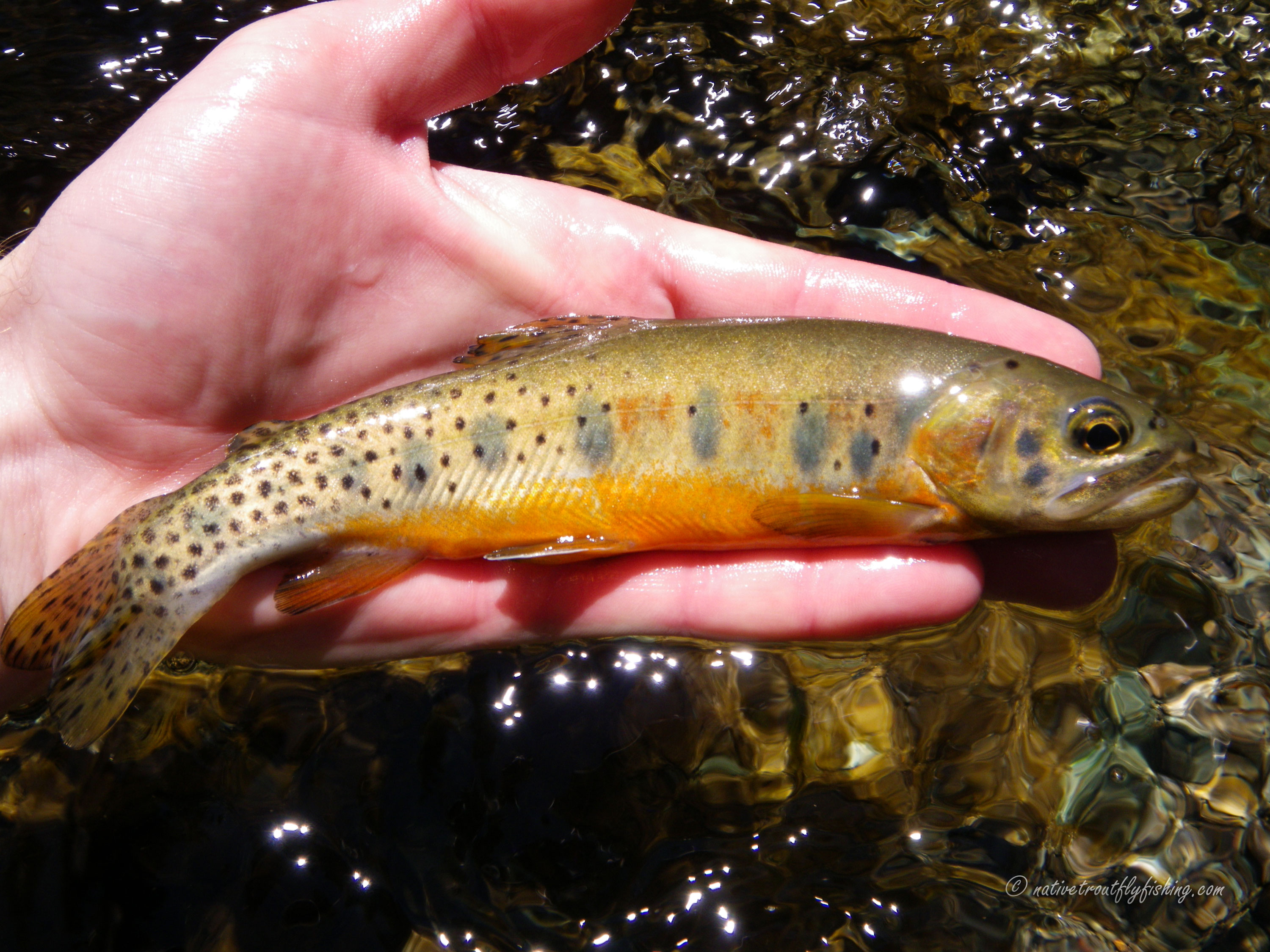
Dyllon took to the river first and had a few good grabs in the first hole, but it wasn't until we got to the next riffle upstream that we landed any fish. I opted for the nymph rig and after a couple casts got a good take and after a quick battle landed a beautiful fluvial Westslope Cutthroat on my October Caddis nymph.

A beautiful orange-bellied Westslope Cutthroat Trout

After I got my Westslope, Dyllon got a nice Redband on his streamer and I picked up a couple small trout on my dry at the head of the riffle before we moved further upstream. The next stretch of the stream was a mix of riffle and pocket water habitat and turned out to be the most productive of the day. With the abundance of pocket water I grabbed my 2WT and started working up the run. The fishing was fast and furious with a fish on almost every casts and two Cutthroat (one on the dry and one on the dropper) on one of the casts. The recovery of the Westslope Cutthroat population was on full display in the section of river, as about 75% of the fish we encountered were Cutthroat. Despite the predominance of Cutthroat, it still was a mystery what would grab on each cast, and I was surprised by a couple of Chinook Salmon parr on dries in addition to the Redbands and Cutthroat.
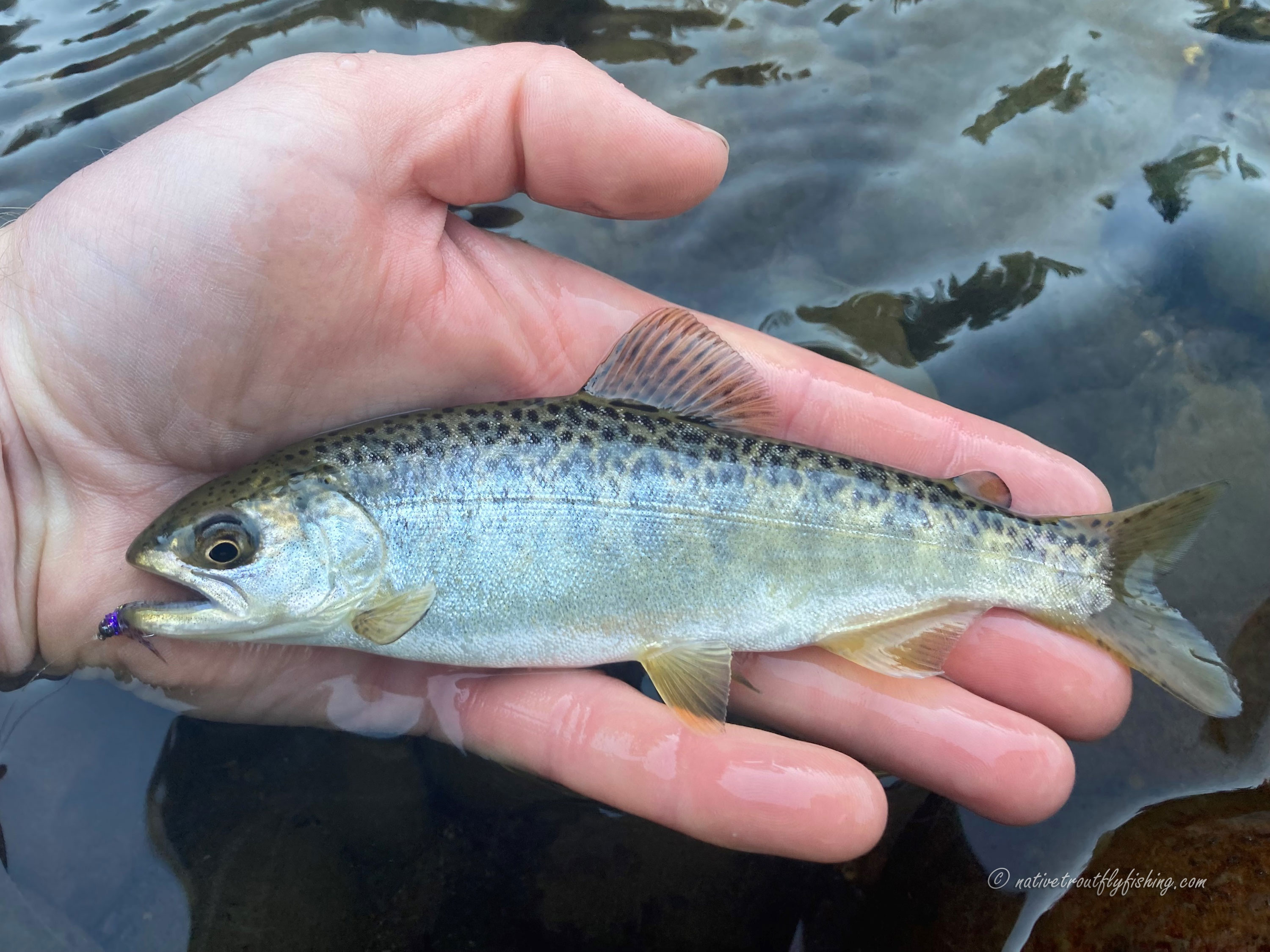
A healthy wild Chinook Salmon parr

Dyllon managed to get a few decent fish up to 12" and continued upstream on ahead of me. Just as Dyllon was vanishing from sight I landed a nice cast along a boulder on the far bank and saw a big flash as a nice trout grabbed my dropper. I got a solid hookset and 2WT was completely doubled over by the powerful fish. The trout stayed deep and made a number of runs before I was finally able to net a beautiful 17" fluvial Westslope Cutthroat.

A beautiful fluvial Westslope Cutthroat Trout

The big Cutthroat managed to thoroughly put down the run, prompting me to continue moving upstream. The water for the next 1/4 mile was predominately pocket or shallow riffle water and most likely looking spots seem to produce a fish on my dry/ dropper rig.

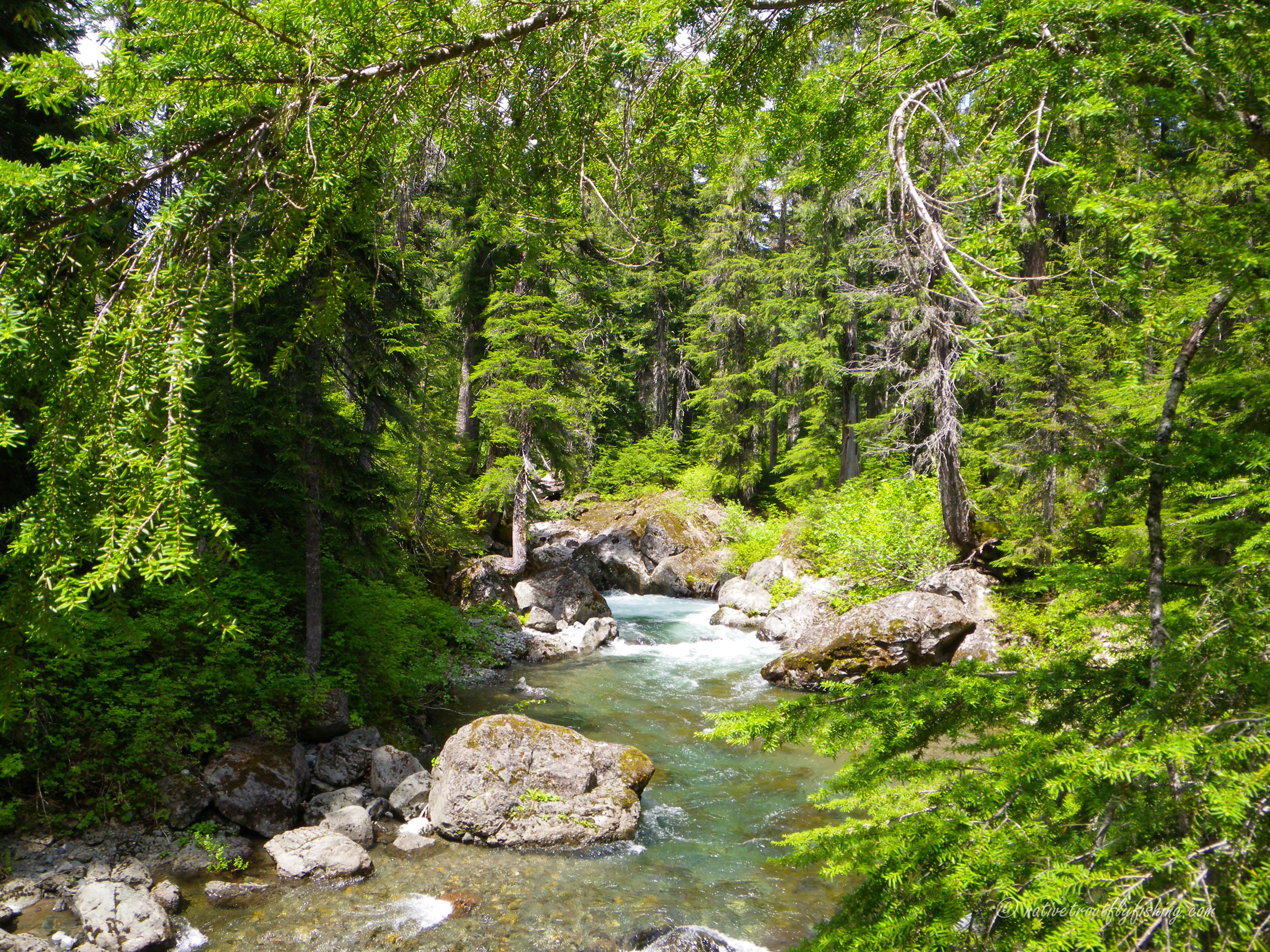
The stream

I linked up with Dyllon at a series of deep pools, where it was time to switch back to my nymph set up. The most productive of these pools was quite deep and required a long drift to get to where the fish were holding. This resulted in a low take to hook up ratio, but by being persistent I was rewarded with some nice Cutthroat and a beautiful Columbia Basin Redband.

A beautiful native Columbia Basin Redband Trout

After the deep nymphing hole, we found one more productive run before we started to run into the afternoon innertube and swimmer hatch and decided to relocate. We headed downstream to where a few major tributaries came together to try our luck in some larger water. Right off the bat we found a nice run and I dredged up a beautiful 11" Westslope on my October Caddis nymph, which was definitely a good sign. After that first Cutthroat, the fishing slowed down considerably. 

The second river

We finally found some more good water about a 1/4 mile upstream, where both Dyllon and I managed to get into some more fish. For me it was another Columbia Basin Redband and a few smaller Cutthroat on my nymph rig, but Dyllon got the real surprise when he hooked into a nice fish on the streamer. I saw him hook into it from downstream and was able to reach him just in time to net a beautiful Bull Trout for him. Bull Trout are quite rare in this watershed making this a very special catch. We took extra care handling this beautiful fish and it was a joy to watch it glide back into the depths after being released.

Dyllon's surprise Bull Trout

We covered a bit more water, but didn't find much more in the way of fish and with temperatures reaching their peak for the day we both decided to call it a day. After encountering 4 native species and finding an amazing Westslope Cutthroat fishery I am already looking forward to my next trip to the east slope of the Cascade Mountains.

Sunday, July 31, 2022

Westslope Cutthroat of the North Cascades

I recently had to make a work trip over to Washington's Methow Valley and managed to find a few hours to do some exploring for native Westslope Cutthroat. While I have caught plenty of Westslope Cutthroat in Washington State, I had never had a chance to fish for them in the northern part the state. My preference has always been to catch native trout from a variety of streams across their native range so I was particularly excited to look for some Cutthroat in the Methow basin.
The upper Methow Valley

The stream I selected, had a barrier in the lower watershed and was supposed to have a healthy population of Cutthroat upstream. Upon arriving at the stream, there were two were two things working against me. The first was that the creek had been caught up in one of the many wildfires that had torn through the Methow basin and much of it had burned. The second was that the cold wet June resulted in a prolonged runoff season and the creek was still high and off color. 
The stream

Given the off color water, I rigged up with a flash body PMX and a Lightning Bug dropper set deep to get the attention of the fish. It turned out that neither the burn nor the off colored water appeared to be hindering the trout and within a few casts a small Cutthroat eagerly rose to my dry fly. The fast water and my 2WT  made the 8” Cutthroat feel more formidable than it should, but it still didn’t take long to bring it to hand. 
A beautiful native Methow Basin Westslope Cutthroat

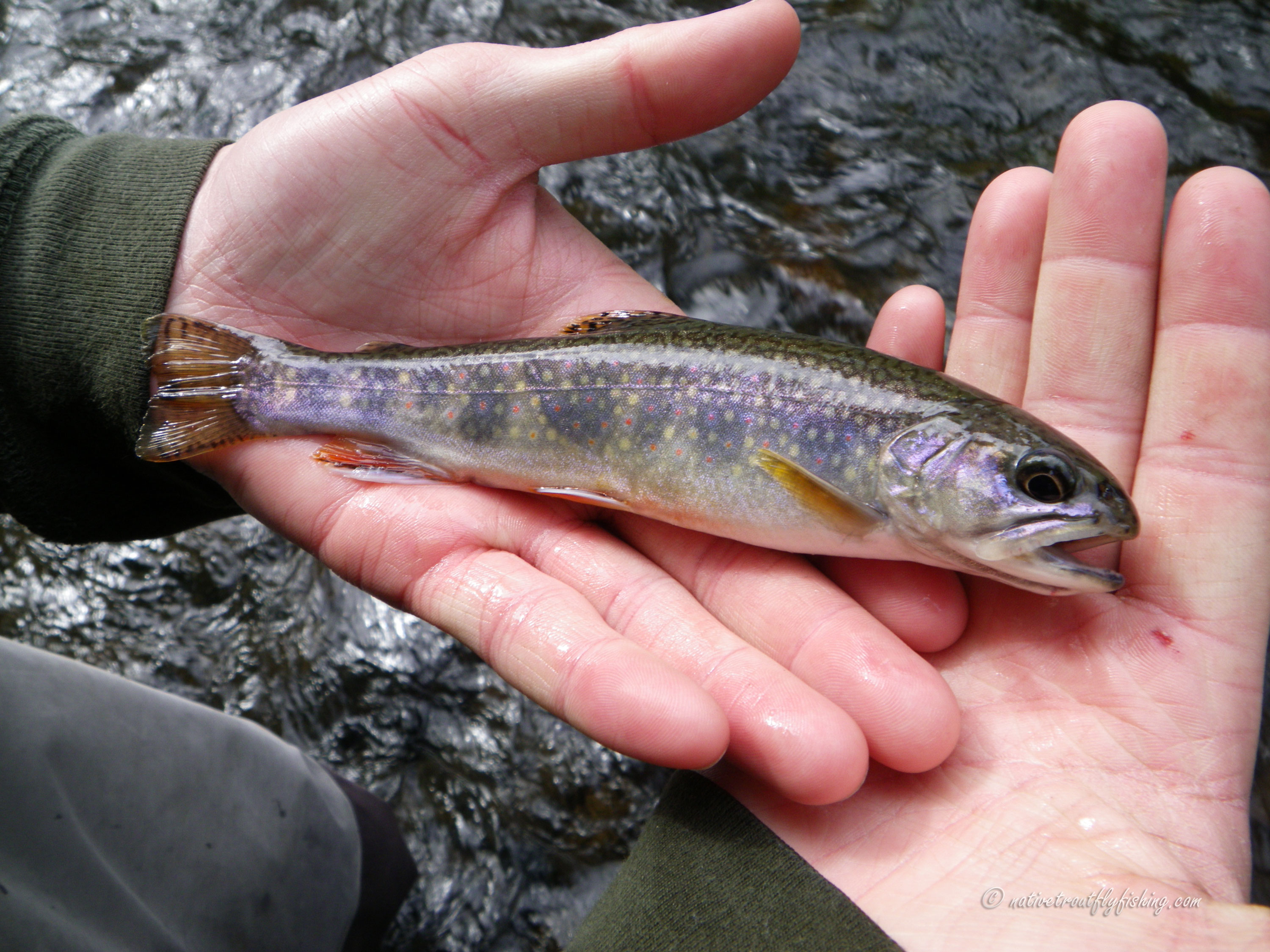
The Cutthroat in this stream were a stunning beautiful mix of bronze-yellow and vibrant orange with a classic Westslope spotting pattern. Continuing upstream, the fishing was fast paced with most pockets producing a gem of Cutthroat, but I was surprised by a Brook Trout on my dropper as well. While Brook Trout are typically the bane of Westslope Cutthroat, luckily this population seemed to holding its own with about 80% of the fish I caught being Cutthroat. 
A beautiful, but invasive Brook Trout

With the sun slipping behind the peaks, I decided to end my day a a particularly productive pool. I switched out my Lighting Bug for a Blow Torch nymph and the trout couldn’t resist it. After a couple smallish fish, I hooked into a fish that that had a bit more weight behind it. I nearly lost the trout when it tried to dive into some woody debris but I was able to pull the 11” Cutthroat  free and bring it to the net.
The big Cutthroat of the day

After catching the biggest Cutthroat of the outing I decided to call it an evening. Despite how many times I have caught Westslope Cutthroat, the beauty of these fish never ceases to impress. 
The canyon on the way out

Then again the beauty of the places these Cutthroat are found is pretty hard to beat too. While in the area, I was also able to get out for a short hike to an alpine lake and I have to say that the scenery did not disappoint. 
Washington truly is a beautiful state!

Tuesday, August 3, 2021

Washington Wanderings

 After my last native trout trip, it has been time for me to stick closer to home for a while, as well as to hunt down some local native trout with a couple friends from out of state.

My first outing after getting back was a short trip to my home river after some resident Coastal Cutthroat. As with everywhere around the west, Washington is feeling the exceptionally dry summer and the river was particularly low. On my favorite stretch of the river, the first riffle is usually extremely productive this time of the year, but barely had enough water to even hold fish. Despite this, I did manage to get one small Cutthroat and one Shiner, both on my dropper. Interestingly the Cutthroat had quite a bit more speckling than normal and appeared to have black spot disease, something I had not seen before in this stream.

A small resident Coastal Cutthroat with blackspot disease
A small shiner caught on a dropper

Fishing my way upstream, I found a deeper run and managed to pick up a few more Cutthroat around 6-8” on my dry and while I am usually able to find a few fish in the 10-12” range on most trips, it wasn’t happening this time and after a couple of hours and perhaps a dozen small Cutthroat I figured I had seen enough and called it for the day.

The river

A healthy little Coastal Cutthroat

About a week after my Cutthroat outing, my buddies from Utah, Dan and Paul flew in for three days of fishing. The first fish that they were hoping to check off was a Coastal Cutthroat and as the local river had been producing mainly small fish, we decided to start on the Puget Sound to see if wee could find some sea-runs. 

We arrived at our first beach shortly after the low tide and at a beach with a good constricted passage, prime Cutthroat water. However, after a couple hours we had only had a few short strikes and follows but no fish landed and we decided to move on. The next beach we went too was at its ideal tide, and Paul got one Coho smolt, but again the Cutthroat were nowhere to be seen, so we decided to try one last beach. Unfortunately, this one also gave us a blank. It seemed to be one of those days where the fish didn’t want to bite... As I was out of time for the day, Dan and Paul ran to the local river and found the Cutthroat right where I had found them the week before.

A beautiful day on the water, regardless of slow fishing

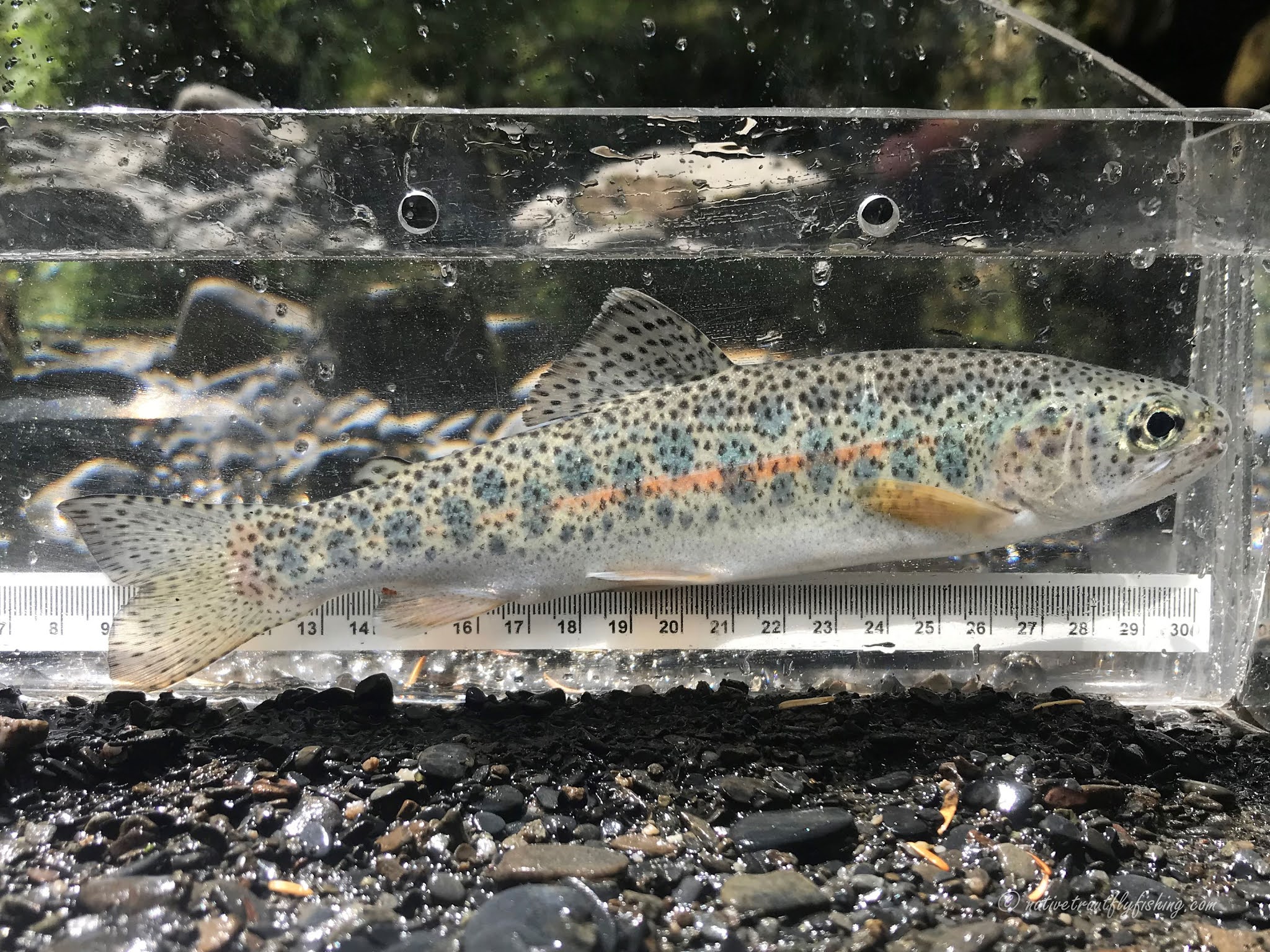
The next day we were headed deep into the Olympics after native Coastal Rainbows. The stream that we were heading too is one of the more unique ones in Washington. This river has a set of barrier falls in its mid-section and as a result has Rainbows with colorations that I have not seen in other local populations. These fish are and almost pure white color, with prominent part marks and a vibrant pink/red band down the lateral line. The other interesting thing about this river, is that it is one of the only places in the lower 48 states with a true native population of Dolly Varden. These Dollies fit a different niche than the Rainbows, being more of benthic feeders, but are mixed in a about a 50/50 ratio and are known to rise to dries from time to time.

The shady river

After making the drive several hours to the river, we geared up and hiked upstream another couple of miles to a stretch that has treated me well in the past. Paul took the first crack at the river and after a few casts caught a small Dolly Varden on his nymph and in the next hole he got a nice about 10” Rainbow. Not long after, Dan too caught a small Dolly this time on a dry fly. 

A small native stream resident Southern Dolly Varden

The greatest challenge with this stream is that it is very high gradient and it can be a long distance between holding water. After Dan and Paul got into their fish, spent some time working along the river before I found a decent little run wit a few nice pockets thrown in. I started out in the soft water near the top of the run and as I picked up my line to make another cast I noticed a fish holding in the soft water side of the seam. On my next cast I got the fly right where I saw the fish and it instantly grabbed my dropper and I pulled in a nice little Dolly. After few more casts, there didn’t seem to be any other takers so I worked down the run a bit. Where the water picked turned into a bit of a riffle, a decent fish rose and this time I brought in a Rainbow. After landing that fish, I cast a couple few feet further back and rose another nicer fish. This one ended up being about 10” and was beautifully colored.

A beautiful pale white native Coastal Rainbow Trout
The fast flowing stream

We worked the stream for most of the afternoon, with each of us getting in a handful of Dollies and Rainbows, before heading back towards Olympia.

For the last day with Dan and Paul, we were heading east to the crest of the Cascade Mountains to search for some Eastern Cascades-Clearwater Westslope Cutthroat. This stream was quite a bit smaller than the last one, but holds a pure population of some of the most beautiful Cutthroat I have encountered. 

Cascade Mountain Cutthroat country

Paul headed up the road to try fishing upstream a ways, while Dan and I started right by the car. Just as with previous trips to this stream, the Cutthroat were plentiful, if not all that large. Within a few minutes Dan had his first Westslope of the day and not too long after that I had mine. As we worked our way upstream and further from the car, the holding water improved and so did the size of the fish, with a few running up to 10”.

A vibrantly colored native Cutthroat

After covering about a 1/2 mile of the creek, we decided to use our last couple hours before Dan and Paul flew out to visit my one of favorite streams in Washington. This other stream is stunningly beautiful and has equally beautiful Cutthroat. I had fished this other spot a number of times of the years, a rarely ran into other anglers, although within the last few years, a Seattle area fly shop started doing guided trips and pressure has gone up significantly since. Unfortunately, this was meant that when we got to the stream, there was already someone else fishing my favorite stretch and while we got a few minutes of fishing in upstream, it took longer to get to the water and we only had time to get a few casts in, catching a single fish before it was time to head out.

Another native Cutthroat

Despite a set back on our last spot, it was a great trip and excellent to spend time on the water with Dan and Paul, touring some of Washington's unique native trout locations. I am hoping that next year, I will be able to make it out to Utah to visit with them and hopefully check the Bonneville Cutthroat off of my list as well. 

Sunday, August 14, 2011

Eastslope Westslopes

This past weekend the drive over the Cascade Mountains on my way home from work was too much to take without a quick stop for a little fishing. As I hadn't caught any Westslope Cutthroat yet this season, I decided to try a small stream on the east slope of the mountains that I have been meaning to check out for some time. The stream was only about 10 to 15 feet across in most spots, but had a nice amount of holding water so it looked promising. With the water looking good, I rigged up with a dry-dropper set-up and started looking for trout.

Good looking water at the first pool

Good looking water doesn't always mean there will be fish around, but in this case it didn't take long to find the Cutthroat as within a couple of casts I had my first small Westslope to hand.

My first Westslope of the summer

From there the pace remained fairly quick and each good looking pool or pocket would yield two or three of these beautiful trout. The fish were quite eager to rise to a dry fly too and before long I took the dropper off due to their willingness to rise. While the stream was beautiful, it looked like about 15 years ago there were some very poor logging practices in effect and much of the watershed had been clear-cut up to the stream banks and at one time. Luckily the area appeared to be recovering nicely, but when compared with other streams in the area the water temps were noticeably warmer. This warmer water also seemed to have the effect of making the stream slightly more fertile than other mountain streams in the area and all of the Cutthroat seemed to be exceptionally chunky for their size.

A stream-side friend

In an exceptionally nice looking pool for the creek, I rose a fish that was slightly larger than most and after a quick battle I brought what is likely the most beautiful trout I have caught all year in. I must have said "wow" to myself at least ten times as I admired this gorgeous trout and watched it swim back into the depths.

Pictures don't do justice for this one

After covering about a mile of the stream and catching more than my fair share of trout, my desire to get home after a week away finally won out and I reluctantly left this gem of a stream.

A great place to spend any evening!

Thursday, August 5, 2010

The drier side of things

One thing that can be said about living in Western Washington is that the weather can be a bit trying. We really don't get the extremes like other places, but the wet and dreary winter weather often refuses to give up its grip even when "summer" arrives. While it hasn't been all that rainy this summer, it has been cool and cloudy and there comes a point when some warmer weather starts to sound really good. With that being said, a campout on the drier side of the state was long over due for me.

The stream

The stream that I chose to camp on drains the Cascades a bit further east than most of the other nearby watersheds and as such tends to be a bit more productive. Another plus is that this drainage is that it is inhabited primarily with native species, including Redbands, Westslope Cutthroat, Bull Trout, as well as anadromous species such as Chinook and Coho Salmon and diversity like that is always welcomed. It didn't take long for the creek to prove that it is more productive than most of the other nearby streams either, as just about every spot that looked fishy would hold several trout. As with my previous visits to this creek my catch was made up completely of the native Redbands. Most of these fish weren't overly large, but they had a real thing for dry flies and were scrappy fighters on a 1wt. With one of these fish in particular I thought I would lose it as it charged straight at a boulder, however instead of trying to use it to shake loose it decided to just jump right over it.

A spunky little Redband

As evening came on I decided to try my luck a bit further downstream then where I have been before and finally found some of the Cutthroat. It seemed that while the Redbands preferred the faster water toward to upper parts of the runs, the Cutthroat were hanging out in the slower water from mid-run down to the tail outs. Still the ratio of Redbands to Cutthroat remained about 15 to 1, but with how fast the action was I still started seeing a good few Westslopes.

A beautiful Westslope Cutthroat

The diversity of the Westslope Cutthroat in Washington always does amaze me. The fish in this drainage were all fairly silvery with spotting typical of what you would expect in Montana or Idaho, where as in the higher altitude streams they tend to be more brilliantly colored and more heavily spot. Likely this variation is a product of their environment, life histories and isolation, with this drainage being larger and more open to migration and most of the higher streams being small and fragmented.
As the light began to fade, I headed back upstream fishing the best water on the way and picking up a few more trout with each stop. I also got a little surprise on my way up when a wild and native Chinook Salmon parr grabbed my fly. It was good to see this chunky little guy, as Chinook have suffered major declines throughout the Columbia Basin.

A healthy little Chinook Salmon

A great way to end the day

It was a great day on the water, with a healthy dose of summer weather thrown in and plenty of fish to be had. However, it is always nice to get back to camp in the evening to just relax, reflect on the day and enjoy nature.

Sunday, July 25, 2010

Back to the Creek Again

I don't know exactly what it is about small streams and the trout that inhabit them, but once you catch the bug it is hard not to keep coming back for more. Sure there is always a bigger more famous river or stream down the road and sure the trout are likely to be larger as well, but when I have a day free I find myself heading for the smaller waters. Part of the appeal of these waters is simply the fact that they aren't famous, meaning that once on the water you are unlikely to see another angler. Then there is also the fact that many of these waters flow through some of the most stunning country around. The trout, while generally small, tend to be willing, wild, often times native and almost always about as beautiful as their surroundings. Simply put things on these smaller waters tend to be just as they are supposed to be and I think it is this that keeps me coming back.

All of the reasons listed above are what led me back to my favorite little mountain creek a few days ago. This time my buddy Gus joined me and with a little more summer-like weather flows had dropped considerably, putting the creek in prime condition.

Gotta love the smaller things in life...

Within about fifty feet of where we started I had landed six fish and risen several others, within a hundred feet I had just flat out lost track already, making for a good start to what would be a very good day.

Native and eager to rise... What more can you ask for?

Just about all of the likely looking pools and pockets produced a few fish, all beautiful native Westslope Cutthroat. In the standard Cutthroat fashion, the fish in the creek had eyes for the sky and a sweet tooth for bigger attractor dries and flying ant patterns.

Gus admiring a beautiful little Cutthroat

As is typical with these types of streams, as we worked high up into the drainage and further from the "easy" to access spots, the size of the fish began to increase. In the very last section of the creek that we hit, I got my fish of the day a beautiful 12" Cutthroat, which put my 2wt to work before finally coming to the net.

A great fish to end the day with

With that fish and our flies tattered from the relentless attacks of rising Cutthroat there was really no reason to continue fishing, so we made our way back down stream already thinking of the next outing.

Tuesday, June 29, 2010

The Annual Trip to the Creek

With a day off and some favorable weather for a change, I decided to make my annual pilgrimage to my favorite Cascade Mountain Westslope Cutthroat stream with Colton. I knew that with the unseasonably wet cool weather Washington has been experiencing, the creek would be high, but then again it also usually fishes well that way. Arriving at the creek it was definitely higher than what wanted to see, but it was fairly wadeable and the clarity was awesome.

A beautiful day on the creek

With the extra water most of the pockets that I am used to fishing were frothy torrents and the fish were holding in completely different areas than I am used to. The fish in this creek have always been notorious for being keyed in on dries and with some large caddis and flying ants in the air, I decided to start out with the old stand by the Royal PMX. Dead drifting the dry through the first pool didn't produce anything, but as soon as I tried skating it, it was fish on. Most of the pockets would hold a Cutthroat or two and the dry seemed to be producing good results, but not quite as well as I am used too. Finally I came to a slower run, where the fish started to flat out refuse the dry, so I tried some small and more precise match the hatch patterns, but the fish didn't like those either. Finally I fell back to a dry-dropper combo of a Royal PMX (smaller size this time) and black Copper John. First cast, bam fish!

Copper John...Yummy!

I pulled a few more trout out of this spot before Colton came down and told me I better get up to the next pool because he could see some nice fish in it. Sure enough when I got up there I could see two or three trout hanging out in the tail out, but I was curious to see how many more were there...

The scene above the water

What was under the surface....

A couple of these fish proved to be willing, including one of the more beautiful Westslopes that I have ever laid eyes on.

What truly keeps me coming back!

Being around lunch time now, we decided to hike out and check out another stream a little further east that was rumored to hold a relatively pure population of Columbia Basin Redbands and Westslope Cutthroat in the upper reaches. The map that I had showed a road heading up the creek valley, but what it didn't show was the gate that barred access to that road. However, when you are served lemons you make lemonade, so we decided to put in a little bit of leg work and check out the lower creek.

The hike into the creek.

Upon arriving at the water it was clear that this stream was flowing much higher than would be ideal, but with a little searching we wound up on some good looking holding water. We quickly picked up a few small Redbands, before being surprised by a small Brook Trout.

My buddy Colton with a beautiful, but nonnative Brook Trout

As we made our way up the valley a ways, pine trees became more common and a thick hatch of mahogany mayflies crept in, keeping the fish's eyes on the surface. The creek kept a good ratio of about 3 Redbands to 1 Brook Trout. So it appeared that while the Brookies were established here, the Redbands were still the dominating force in the stream.

Up the valley

We fished the creek for quite a while, but as we got further up the valley the combination of the high flows, thick brush and rugged terrain made it impossible to continue upstream, so we were forced to head back down. We covered one more side channel that we had passed up on the way down and picked up a few more fish before completing the hike back out.

What I came for!

While conditions have been tough lately, things are setting up nicely for a great late season fishery this year.

Saturday, July 11, 2009

Central Washington Redbands and Westslopes

This past Monday I had a free day to head over to the east slope of the Cascades in Washington to check out a few of my favorite streams. The only problem was that while the 4th of July weekend had shown Washington some of our nicest weather yet this year, by Monday another marine layer had found its way inland yet again. My friend Zach had been bugging me to show him this spot for a couple of years now, so I finally invited him to join me this year.

By the time that we reached the mountains the weather had broken down bit it was raining in earnest. However, as I had hoped when we arrived at the creek the Cascade Mountain rain-shadow was in effect and while we still had overcast skies it looked like we had left the rain behind. Upon laying eyes on the stream I was a little surprised to see how low the water was. Last year when I had fished it at this time of the year, it had been a raging torrent that was tough to cross in all but a few select places. This year it was a full foot lower, no doubt a direct effect of low snowpack and an unusually dry June. While I typically like fishing a dry and dropper combo, I have fished this creek enough to know that when its native Westslope Cutthroat are feeding, they are looking for food on the surface making the dropper more of a hassle then it is worth. As such I strung up my rod, tied on a size 12 Royal PMX and hit the water.
A grey day at the creek

The action started out fast and furious and my first cast rewarded me with a nice 8" Westslope Cutthroat that attacked my Royal PMX with reckless abandon. The next few hundred yards of the stream continued to yield good numbers of Cutthroat in the 5-9" range, which confidently rose to take our dries. After this stretch, things slowed down a bit and we had to search for the fish a little harder. Even so most likely looking spots yielded a riser or two.

A typical Westslope Cutthroat from the stream.


Zach with a native Westslope Cutthroat

Over the years I have found that the higher upstream that I go on this creek, the better the fishing gets. However, this year that was not the case and instead the fishing remained slow while the weather began to deteriorate even more. In fact this was the first time in three years that my favorite run on the upper creek didn't yield a single fish. On top of this Zach managed to find a stick that was sharp enough to punch a hole in the leg of his waders, making for rough going with the frigid water. I did hook one truly note-worthy fish in the upper part of the creek, that was at least 12" but shook loose shortly after engulfing my dry fly.

Looking downstream on an especially high gradient stretch of creek

After finding the upper part of the creek less productive than normal, Zach and I made the call to head back to the car and try out another stream that was a little further to the east. We did fish a few of the more prime lies on the way back downstream and managed to catch a few more beautiful little Westslopes before reaching the car and hitting the road again. 

We traveled down the Yakima River Valley for another half hour before turning up the creek valley and searching out a productive piece of water. Although it was rather windy, the weather was sunny and 70 and the water looked to be in perfect shape. The last time the I had fished this stream the trout were quite eager to take attractor flies, so I left the Royal PMX on but added a gold size 16 Lightning Bug as a dropper. As I was rigging up I started eyeballing a little pool behind a log jam and noticed a decent looking trout finning in the tailout. Definitely a good sign!! 

I wanted to plan my approach on this fish so instead of proceeding to the log jam I first checked out run downstream where I managed to rise, but missed a decent sized trout. After this it was on to the log jam where the fish was still hanging out right underneath some overhanging branches. I made my cast to the trout and line flew perfectly between the branches and the water landing just a few feet upstream of the fish, which confidently rose to meet it. I set the hook and the fish launched itself out of water and made a few small runs before I brought a beautiful Columbia Basin Redband to hand.

A beautiful Redband
I
 managed to get one more small trout out of this pool on my dropper, before I continued upstream to where Zach was fishing. When I found him he was just releasing a fish, which turned out to be his third. As we worked our way upstream, the fishing continued to be productive, with just about every pocket and likely looking spot producing one or two Redbands. In a particularly good pocket behind rock, I managed to catch five trout, with one taking my dry and the rest falling for the Lightning Bug dropper.

Zach working his fly along an especially fishy looking log jam.

The fishing continued to be consistent for Redbands averaging 6" to 8"as we continued upstream, until we came to a pool with a basalt cliff running along it. Zach took point on this spot and one his first cast a nice fish rose for his dry fly. He missed the riser, but got lucky and another trout had grabbed his Copper John dropper at the same time and he got a solid hook up. This ended up being the larger of the two fish and after a few seconds he managed to bring it to the net. Whether this fish was a Redband or Cut-bow was hard to say, as it had a vivid Cutthroat slash but the colors were distinctly those of a Redband. No matter what it was it was a fine trout at just short of 11". After Zach released his fish I got a try at the pool and hooked up with one trout for brief moment before it came loose.

The basalt cliff pool

Upstream of the pool the stream was much less productive for the next quarter mile and we only managed to rise and handful of fish. The reason for this became clear and as well rounded a bend we ran into a crew of WDFW fisheries biologists that had been electroshocking the creek to do a study on the diet of the trout. From what they had to say, Coho Salmon had been reintroduced back into the creek during the previous year and they were looking into the importance of Coho fry in the diet of the Redbands and Cutthroat that call this stretch of stream home. Some of the larger Redbands did have Coho fry in their diets, suggesting that a streamer might not be a bad idea next time.

After our brief conversation with the crew Zach and I headed back downstream, and I got another shot at the basalt cliff pool and this time managed to catch a 10" Redband on my dropper. We also fished a few of the other prime lies on the way to the car and picked up a couple more trout. However, at this point were more keen on getting back to the car so we could explore one more nearby stream.

A post release Redband

The next stream that we decided to fish was a headwater tributary of the last one and we were hoping that we might find a few Westslope Cutthroat up there. This stream took a little bit of hiking to get to, but after about 3/4 of a mile we reach the water and started fishing. We found tight condition small stream fishing at its finest and there were numerous deadfalls overhanging bushes waiting to intercept our flies. However, there were a few decent pools a here and there and as we moved upstream I caught a few Cutthroat and a Redband or two as well.

Stream #3

A Westslope Cutthroat on the Royal PMX

In a deep slot Zach caught a fish that he was pretty happy about, but really has no business in the creek, a Brook Trout. Outside of their native range, Brookies have been been problematic for native Cutthroat across the Western US, as they typically out compete Cutthroat in cooler headwater streams. My worries were put to ease a bit, as for the remaining half mile of the stream that we covered, we only encountered the native Cutthroat and Redbands, suggesting that the Brook Trout population may not be too well established.

Zach's Brook Trout

After fishing this stream we headed to one last stream to quickly it out. However, after driving to the end of the road and tromping around a mosquito infested meadow and not seeing the stream anywhere close by we decided that we had done enough fishing for one day.

A view of the meadows

After a few more mosquito bites and little more trudging across the meadows, we hopped back in the car and made drive back down the valley and across the mountains to Gig Harbor. For Zach, this was an especially successful outing as he managed to catch three new species of trout. For me it was just nice to be out on the water looking for native trout in some beautiful country.