Redband Trout are a primitive form of Rainbow Trout and the Northern Great Basin of Oregon and California is home to a great diversity of these fish. During a trip that I had made during 2006, I had caught one of unique varieties of Redband trout that are found in this area and my goal for this trip was to catch the rest of them. Beyond that, I had decided that over the summer I would try to do the
California Heritage Trout Challenge, where you have to catch six different types of trout in their native range within California. With three of the fish that I was targeting located in California, I figured that this would give me a great jump on it as long as everything went as planned.
Day 1: Sunday June 24th 2007: My dad and I left home in Washington early in the morning with rainy weather that would follow us all of the way into central Oregon. Normally when we head over the the Bend, Oregon area we take US 26 over the Cascades, but with bad traffic getting out of the Portland area we decided to take US 20 instead. This was a good move as there was nobody on the road and the drive up the Santiam River valley made for a nice change.
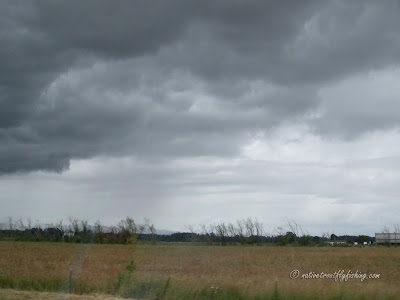 |
| Nasty weather on the way through western Oregon |
Our first stop for the trip was Hosmer Lake, a high mountain lake located about an hour southwest of Bend, Oregon that is stocked with Atlantic Salmon. The lake was beautiful, but the weather was cold and windy and the fish did not appear to be too interested in feeding. I did a circle around the part of the lake near the boat launch in my float tube, using nymphs, dries and streamers. I even tried some of my standby attractor patterns for resident Coho Salmon in the Puget Sound, but only had a couple of hits. With the fishing being slow and the weather going down hill fast, my dad and I decided that it would be best just to head over to the next spot instead of hanging around for what promised to be a chilly night at Hosmer.
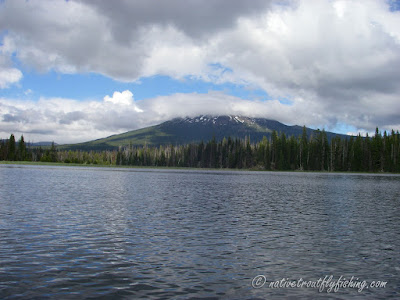 |
| Hosmer Lake with Mount Bachelor in the background |
From Hosmer Lake, we headed southeast into the Fort Rock Basin to search for its native trout. We arrived at the banks of the creek that was supposed to have the best population of Redbands right as the sun went down and set up camp for the night, hoping the fish would be hungry in the morning.
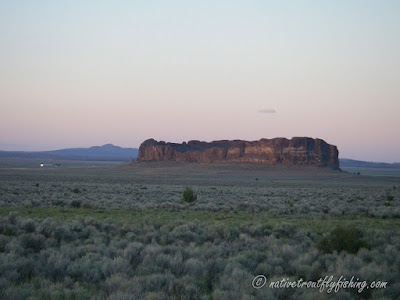 |
| Fort Rock at sunset |
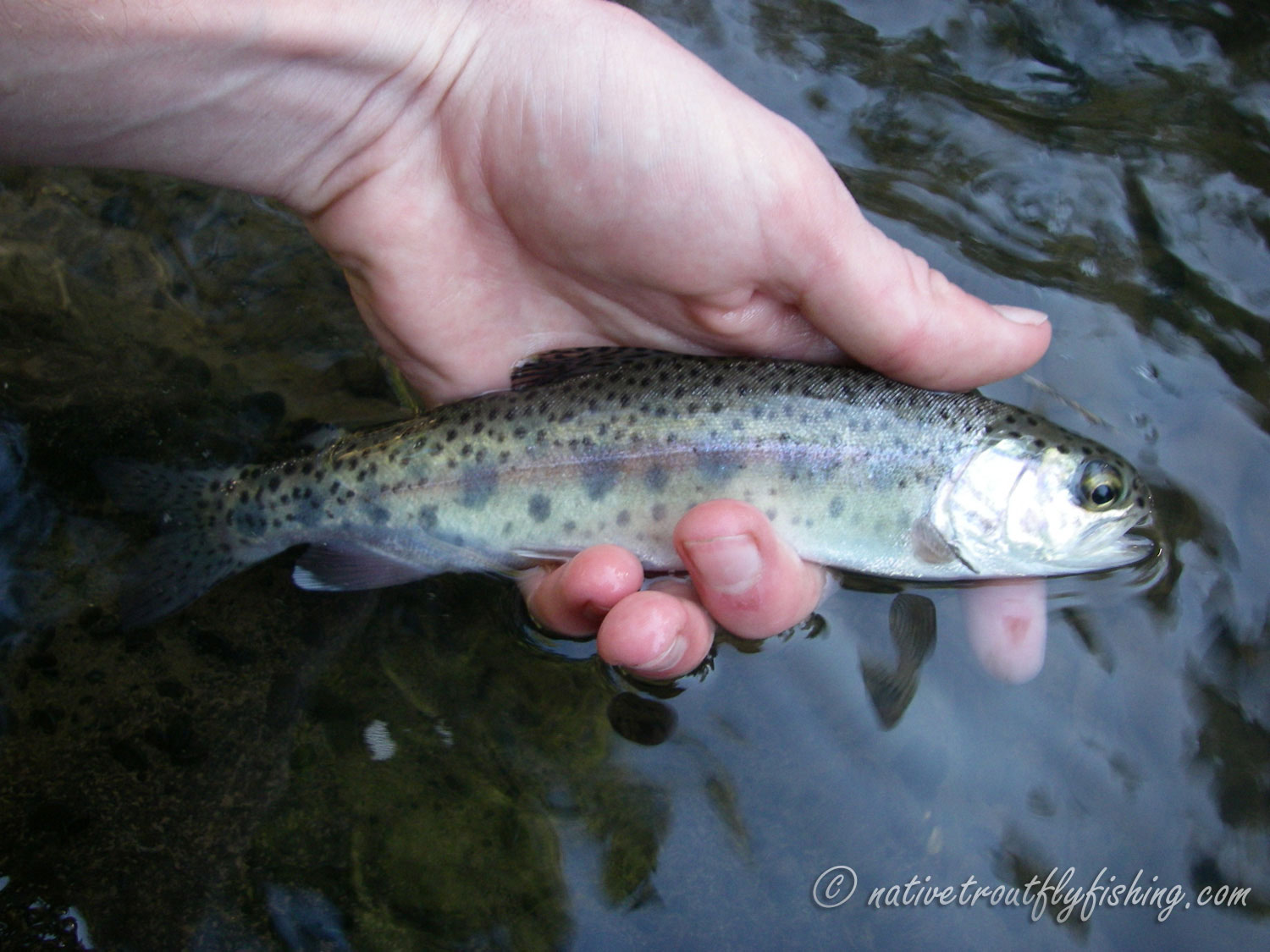
Day 2: Monday June 25th 2007: When I woke up in the morning the thermometer in my car read 33 °F, so I decided to just scout the creek out until it heated up a bit. I hiked both upstream and downstream about a 1/2 mile and found some decent looking water downstream, but the best spot I had found was the culvert pool were the road crossed the creek. By 8:00AM it had warmed up enough for my liking, so I rigged up my 4wt with a size 12 Royal PMX and size 18 black Copper John dropper. The first spot that I tried was the culvert pool, which seemed to be packed with fish and it only took me a couple of minutes to catch my first Fort Rock Basin Redband.
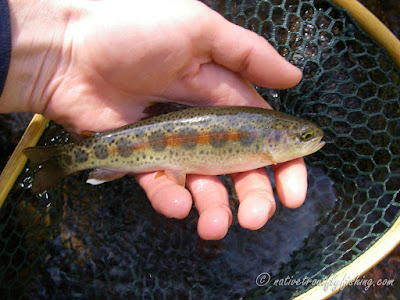 |
The Fort Rock Basin Redband |
I fished the pool for another 45 minutes or so, and caught a few more trout before the fish seemed to stop feeding. At this point I headed for some of the spots that I noticed earlier in the morning when I scouted the creek, but after spending an hour of bush whacking and fishing I had only gotten one more small fish. The only thing to do was head back to the culvert pool, where I caught a couple more fish and even had two on at the same time for a couple of seconds.
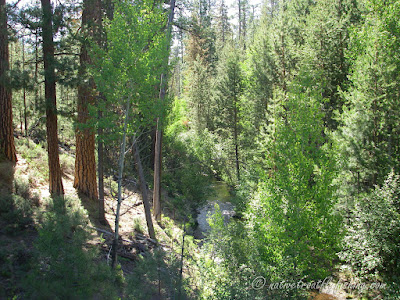 |
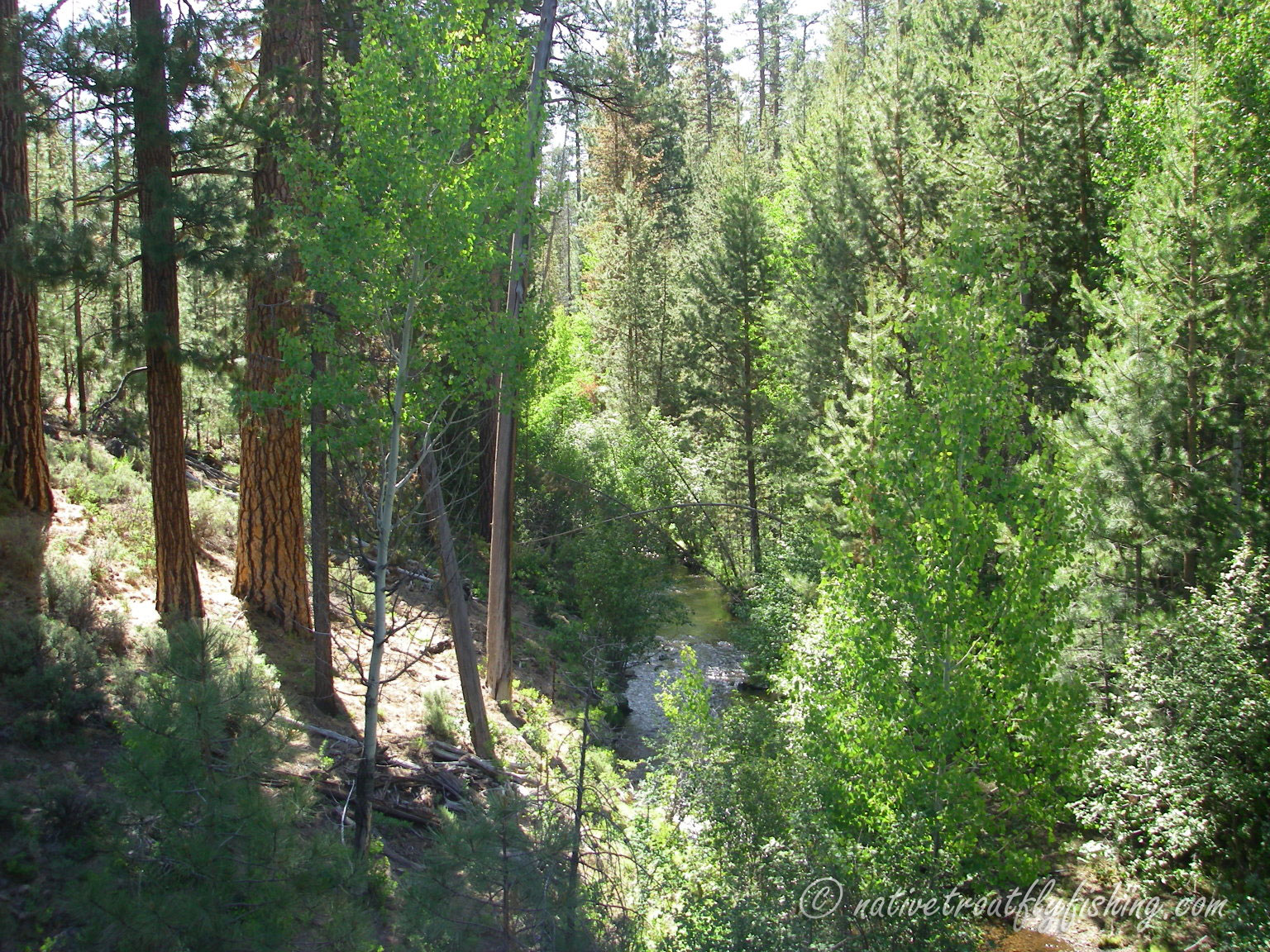
| The creek upstream of the road |
With the first variety of Redband successfully caught, my dad and I decided to hit the road again for the next spot, which was a small stream draining to Summer Lake in the Chewaucan basin. The research that I had done prior to heading out on the trip showed that this stream had never been stocked with hatchery trout, so it should have the purest remaining population of Chewaucan Redbands. We drove up to Summer Lake rim and the headwaters of the creek, but it was much smaller than I had anticipated at only a foot wide and a few inches deep in most places. I decided that I would spend about an hour exploring the creek, so I headed downstream to search for some type of holding water. There was evidence of beaver activity along the creek, but it all appeared to be at least five or ten years old and all of the ponds had long since was out. After a 1/2 mile of fishing a hiking and still no sign of fish, I pulled the plug on it and headed back to the car.
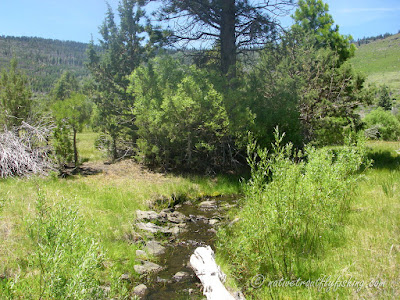 |
| The fishless creek |
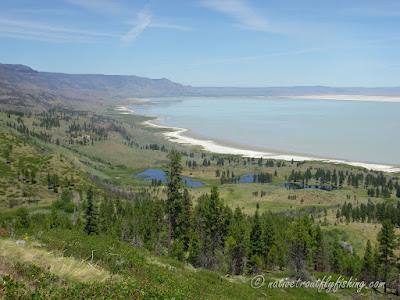 |
| Summer Lake from above the rim |
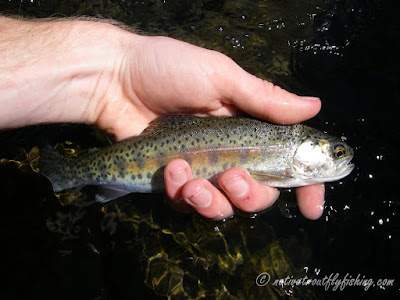
While I had failed to catch any Redbands at this creek, I don't like going on these trips without backup plans for unproductive streams. This trip was no exception, so it was on to my second choice Chewaucan Basin stream, which ended up being much more productive than the first one. In fact, I was rewarded with a Chewaucan Basin Redband on my dry fly on the first cast. The fishing at this stream was amazing and every likely spot seemed to hold a fish with some going 12" to 15". The water temperature at this stream was some of the warmest that I have ever seen trout in, a testament to the adaptations of these fish to the extreme climate of the high desert of Oregon.
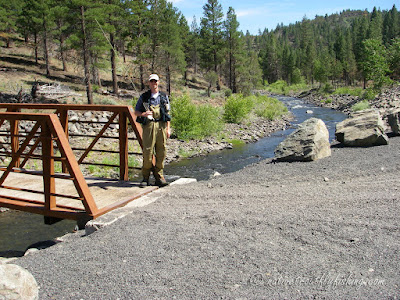 |
| Me at the Chewaucan basin stream |
 |
| A Chewaucan Basin Redband |
 |
| A old abandoned cabin along the Chewaucan basin stream |
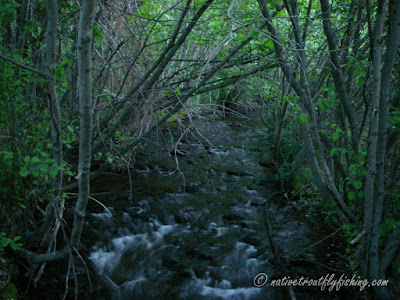
The next stop was a small stream in the upper Klamath Basin that all of my research had indicated held a good population of Klamath Redbands. It was evident as soon as we arrived at this stream that I was going to be in for some "fun" fishing, as the creek flowed though an absolute tunnel of vegetation. I decided that I would hike upstream to see if I could find any beaver ponds or meadow stretches were the creek might open up a bit, but after hiking a mile upstream I had no such luck. I decided to make the best of the situation and scrambled through the bushes down to the creek. When I the water, there wasn't even enough room to stand up straight let alone make a cast. This was small stream fishing in the extreme and the only way to get my fly to where it needed to be was doing some tap and dap fishing or using a bow and arrow cast. Even with the less than ideal conditions I managed to get a fish to grab my fly, the only problem was that there wasn't enough room to raise the rod tip to set the hook, so I lost it.
 |
| The Klamath basin creek; the most difficult stream that I have ever fished... |
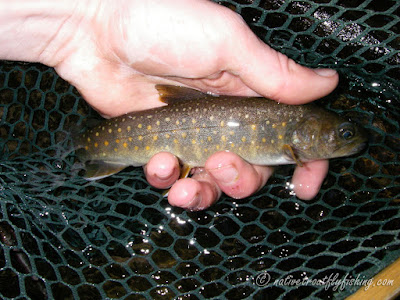
Frustrated with the cramped conditions, I decided to continue my search for some better water. About another half mile upstream I found a spot with a decent pool, where I would have enough room to set the hook if need be. I rose a fish as soon as my Royal PMX hit the water, but as before didn't get a good hook set. However, after a couple more tries I finally got a solid hook up. As it turned out, it wasn't a Redband like I was expecting, but instead was a stream resident Bull Trout! My research had indicated that Bull Trout were also present in this stream, but with all of my failed attempts to catch this elusive fish in Washington I never expected that I would actually catch any.
 |
| My first Bull Trout |
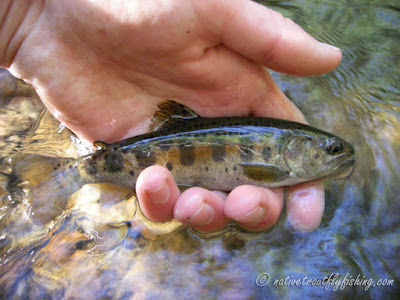
On the next cast, if that is the right word, I finally caught a Klamath Basin Redband on my dropper. After this, the fish seemed to be aware of my presence so I moved little ways upstream to another small pool where I got another Bull Trout and Redband. Above that pool, the vegetation formed an impassible barrier, so I made my way back to the trail. Since I had caught the fish that I came for and the sun was beginning to set, I decided to forgo anymore fishing and hiked back down to camp at the trailhead. This was without a doubt the hardest stream that I have ever fished, but with the Bull Trout and Redbands that I caught it was well worth the effort.
 |
| A Klamath Headwaters Redband Trout |
Day 3: Tuesday June 26th 2007: The fish to target for the day was the McCloud River Redband, which are native to the upper McCloud River drainage in the Mount Shasta area of California. We broke camp in the Klamath Basin early and made our way to the spring fed streams on the southeastern slopes of Mount Shasta that are a refuge for the McCloud River Redband.
 |
| Me at the base of Mount Shasta on the way to the McCloud River Redband waters |
We arrived at the first stream at around 11:00 AM and on my third or fourth cast, I caught my first Redband. The fishing didn't slow down either and just seemed to improve as I worked my way upstream. It was evident that the population of fish here was healthy and they didn't seem to think twice before grabbing my fly. After covering about a quarter mile of the stream and catching plenty of Redbands, I headed back to the car and handed my fly rod off to my dad who also caught several fish. Once we had caught our fair share of fish, we hit the road again to try to find some more Redbands in another nearby stream.
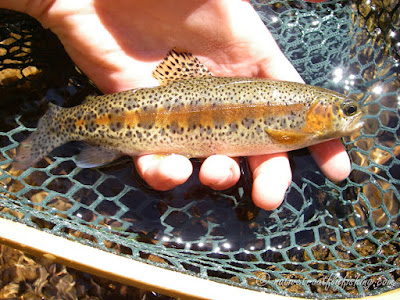 |
| A McCloud River Redband |
 |
| A productive run on the McCloud River Redband stream |
I had originally planned on fishing two more streams that these Redbands are native to in order to get a better sampling of the diversity found among the different isolated populations. The only problem with this idea was that poor signage, a lack of GPS and maze of forest service and logging roads made the other streams impossible to locate. We ended up wasting the next couple of hours on a wild goose chase looking for a couple of streams that we never found. At this point we were pretty worn out and my dad suggested that we should head over to Reno for the night. This idea sounded great as it would possibly give me a shot at some Lahontan Cutthroat and put me another step closer to completing the Heritage Trout Challenge. However, just getting to Reno in the first place ended up being no small task though, and we ended up wasting two hours waiting for pilot cars at road work projects. As we got closer to Reno we noticed an odd cloud over the area which ended up being smoke from a forest fire in the south Lake Tahoe area and ruled out my plans of going after any Lahontan Cutthroat on this trip. Skipping the fishing ended up making the stay in Reno a bit more relaxing at least, as it gave us a chance to take in the town and get a good nights sleep.
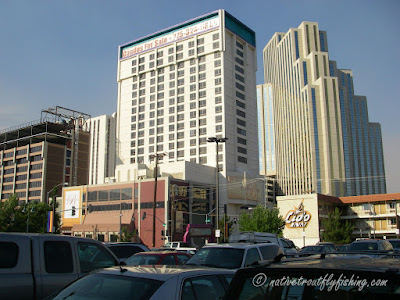 |
| Reno Nevada |
Day 4: Wednesday June 27th 2007: We got off to a slow start in order to get a little enjoyment out of the swimming pool at our hotel in Reno. Once on the road we ran into three more road work projects on US 395 on our way to Goose Lake and lost about another hour due to them. When we finally got to Goose Lake, we headed up a forest service road leading to the stream that I wanted to fish. Once again finding the stream proved difficult, but after getting turned around a couple of times we finally made our way to the creek. The creek was beautiful and flowed from meandering meadows into high gradient pocket water sections. Both my dad and I got rigged up to fish here and at the advice of a California fisheries biologist we started out in the pocket water section, which was supposed to hold more fish than the meadow water. My dad hooked a fish almost right away on his dry, but lost it after a few seconds. The next fish that he hooked stayed on the line and he got the first Goose Lake Redband of the trip. It soon became evident that the fish in this stream were experts at throwing flies and if you wanted to land them at all you had to do it quickly. I fished my way downstream further into the pocket water section, and managed to catch five Redbands including one that was decent size for the creek on my nymph. While the pocket water was much more productive, meadow section was a bit more scenic and I couldn't resist trying it out for a bit. While this section was fun fish, true to what the biologist had indicated it was much less productive, as the fish were few and far between and spooked easily.
 |
| Me working the pocket water section for some Goose Lake Redbands |
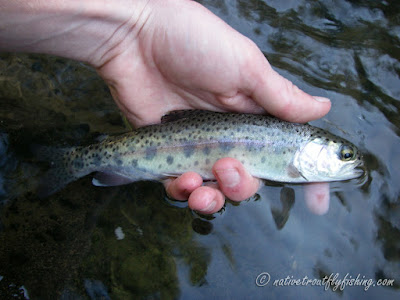 |
| A Goose Lake Redband |
After checking another variety of trout off my list, we made up a quick dinner then hit the road again headed for the northern side of the Warner Mountains, so I could try to catch some Warner Lakes Redbands. The road to this spot was one of the hairiest that I have ever seen, as it switch backed up the mountainside. Along the way we passed several old gold rush era mines before reaching the tiny stream which meandered through a meadow at about 7,000 feet above sea level. Upon exiting the car I discovered that this spot was completely infested with mosquitoes prompting me to make quick work of catching the Warner Lakes Redband. Luckily the fish agreed with this idea and while not large, there were a good number of them at the road crossing pool. I used the same ever dependable Royal PMX and Copper John setup and caught a handful of fish out of the pool before heading upstream a little further. I lasted about a half hour before blood lose from mosquito bites and the failing daylight forced me to call it a day. We had originally planned on camping here, but between the mosquitoes and rapidly dropping temperatures we changed our mind, and decided to drive through the night to reach the next spot.
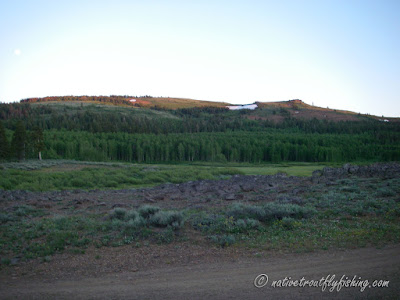 |
| The Warner Mountains above the creek at just before sunset |
 |
| A small Warner Lakes Redband |
The drive to the next spot located in the Hart Mountain Antelope Refuge was a little interesting as the desert came alive at night and all manner of creatures seemed intent at testing our ability to dodge them. We arrived at the creek at around midnight, set up camp quickly and hit the hay.
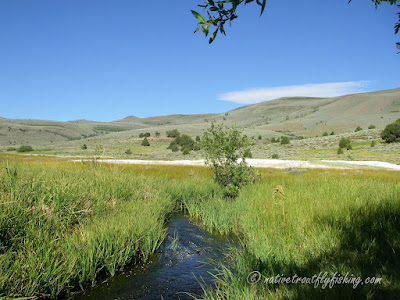 |
| The Catlow Valley stream |
Day 5: Thursday June 28th 2007: We got up at about 7:00 AM and I immediately went out to check out the creek out with my fly rod. This stream appeared to be about the width of the one above Summer Lake where I couldn't find any trout, but had much better depth as it flowed through a meadow interspersed with a few groves of Aspens here and there. I decide to head downstream to where a small tributary added its flow to the creek and found a decent pool with some fish in it. As soon as the Royal PMX hit the water a fish attacked it, but unfortunately it managed to shake the hook. On the next cast though another fish grabbed my fly and I got a solid hook up and I caught my first Catlow Valley Redband, which was followed by a number of others.
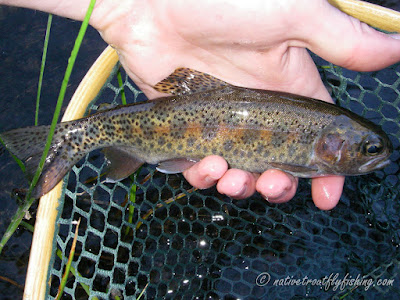 |
| My first Catlow Valley Redband |
 |
| A deer on the hillside above the creek |
The fishing in this creek was ridiculous, and every pool would hold several fish that grabbed my fly as soon as it hit the water. On my way back upstream, I stopped at a small pool where I caught my biggest trout on the creek, a nice deeply colored about 10" buck. As we were heading out of the refuge we saw a good number of Pronghorn Antelope amidst some beautiful scenery. With the Catlow Valley Redband being caught and photographed, we called it a wrap and started the long drive home.
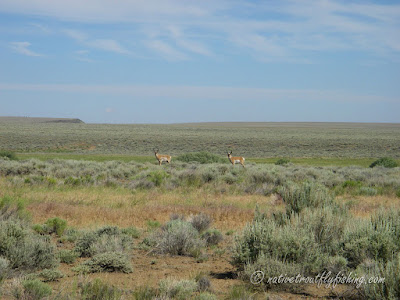 |
| Roadside pronghorn antelope |
Overall the trip was a great success; I managed to catch seven new varieties of native trout and one new char. One top of that I got three fish for the California Hertiage Trout Challenge. Fishing licenses and gas were expensive as usual and the roads and roadwork in Northern California less than ideal, but the fishing more than made up for it.









 Posts
Posts


