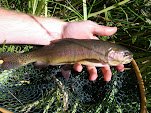
About this blog

This blog is all about fly fishing for native trout. On it I cover trip reports, fishing tactics, conservation, the latest news about native trout species and much more. This site provides a companion to my web page Nativetroutflyfishing.com.

Gary

Sunday, March 31, 2024

Persistence pays off

One of my goals this past winter was to start to dial in the fishing at my local beach a bit more. However, after a half dozen fruitless trips I was starting to give up on this particular spot for this time of the year. My main draw with this beach has just been its proximity to home, but so far I have found the fishing to be spotty at best. Part of the challenge has just been learning the beach, as different beaches fish better or worse on different tides and particular times of the year. While I had over a dozen beaches close to home and dialed in when I lived in the Tacoma area, Olympia has been like starting over again much more challenging to just find access to beaches. 

Part of the challenge is that some beaches are traveling beaches, where Cutthroat cruise the shoreline looking for food and others are holding spots that consistently produce. This particular beach seems to fit into the first category and as such I have been be hitting it for short 30 minute intervals throughout the winter to try to pin down when and where the fish are most likely to stop and hold as they cruise along the shore.

Beautiful weather on the beach

This particular outing I was treated by a rare western Washington bluebird late-winter day, with no wind and a strong outgoing tide, as good of conditions as I could ask for. To make sure I was prepared for any situation I brought two rods, one with a floating crippled baitfish and the other with a sinking shrimp pattern. With the dead calm conditions, I started working the beach with a surface fly at small point, but and kept the second rod in reserve just in case. For the next 30 minutes I covered a good piece of water around a point and into a slight cove where I have caught fish during the summer months, but didn't have any initial luck. However, as the tide dropped I moved back to the point, where a good current had picked up and the tide was a perfect level for fish to cruise over a patch of broken shells and barnacle covered rocks, which is a substrate that often produces sea-runs. 

Sure enough a few minutes later I had a fish roll on my surface fly about 30 feet in front of me but it didn't take. Another cast with the surface fly failed to get any attention, so I quickly switched over to my other rod, made a cast and sure enough after a few quick strips I got a solid take and hooked into a decent fish. One thing I love about sea-run Cutthroat is how hard they fight for their size, and this fish was no exception, even giving my 6WT a run for its money. Luckily I got a good hookset and within a couple minutes was able to slide my net under the chrome bright native Cutthroat.

A flawless sea-run Coastal Cutthroat

After releasing the fish, I worked the point for another 20 minutes, but I didn't see any other signs of life. While this beach has been an inconsistent producer, it was great to finally connect with a fish, and continue to dial in when and where the fish are holding on my home stretch of water.  

Friday, March 15, 2024

Slow start steelheading

Being a steelhead angler in the Pacific Northwest is full of highs and lows, and the last few years have been particularly challenging. A confluence of poor ocean conditions, habitat loss, predation and outdated fisheries regimes, have resulted in some of the lowest returns of steelhead on record. These low returns have resulted in more and more closures over the years and exacerbating the problem steelhead fishing has never been more popular, meaning that more anglers are packed into fewer places. As a result fisheries in places like the Skagit River and Olympic Peninsula have reported significant increases in angler pressure in recent years. With all of these pressures facing steelhead and being an angler that appreciates solitude, I have found myself fishing the big name rivers less and less and instead have increasingly focused my attention on the lesser known, more out of the way spots.

This season started out with a rocky start and after having to cancel my first two outings due to high flows, my neighbor Dyllon and I had planned on heading out to the coast to finally kick off the season. Unfortunately, the night before we were set to go, Dyllon got sick and it was back to the drawing board. Luckily my fellow Trout Unlimited coworkers Greg and Alexei invited me to join for a morning on the water. My main objective this trip was to dust off my two handed rod and shake out some casting cobwebs, and get some input from Greg who is an accomplished Spey caster on a better Skagit line for my 7/8WT which has never quite felt right. With swinging flies being the primary interest Greg had a good run in mind, but despite arriving at the river just as the sun was starting brighten the gray winter sky, there were already two anglers gearing up and we had to go with our plan B run instead.

Ready to roll

After a gearing up and a quick bit of bushwhacking, we found ourselves on the water at a beautiful run. However, I have always found that this spot fishes best at higher flows, and despite a small bump in the water overnight, the river was still running low and clear making the odds of encountering a steelhead here a bit more of a long shot than usual. However with the low flows, I was able to ford the river to try the next run up, while Alexei and Greg took the main holding water. The run looked great, with a perfect seam down the far side, but after an hour of working the water we hadn't had the slightest bump and when another angler rived and started fishing right between us we decided it was time to relocate.

An eagles net overlooking a nice piece of water

Just like the first spot, our next one had some great looking runs. Once again, Greg and Alexei worked the downstream water, while I scouted out three good runs upstream with both my nymph and swing rods. However, a couple hours of effort failed to produce any signs of fish so we decided to move on once again and see if the run we had originally planned start at was free yet. Sure enough it was and as it was an excellent looking swinging run we all grabbed our two handers and got to it. This time it didn't take long for someone to connect with a fish, with Greg hooking into something at the top of the run. However, the fight was all wrong and a short tug of war, Greg reeled a sucker in.

After the three of us had covered the entire run without touching anymore fish, I took the opportunity to get Greg's input on what was going one with my Winston Spey Rod. Being a bit older, this rod wasn't designed with the modern Skagit compact lines in mind and after a few casts Greg had some thoughts on a couple of  intermediate length heads that would be worth try. Now it will just be a matter or ordering them, then getting the rod back out on the water to see which one casts best.

A beautiful end to a fishless day

While the fishing may have been slow, that is part of steelhead fishing and even if we didn't touch and steelhead, it was great to dust off the gear and share some great water together, and I am also excited to invest in a couple new Skagit heads so that I can finally get my Spey dialed in, something that I have been meaning to do for years...


Thursday, February 29, 2024

Filling the knowledge gap

After moving down to Olympia Washington in the South Puget Sound several years ago I was excited to learn a new area for sea-run Cutthroat but I have been confronted with several challenges as I have been exploring the area and have had very limited success in my saltwater fishing. Yes I have caught fish but things have just been much less consistent than I would like. 

In moving down to Olympia, I quickly recognized just how different the deep south Sound is than my previous home waters around Gig Harbor and on the Kitsap Peninsula. Deep South Sound tends to be much more estuarine than the central Sound, being comprised of a number of finger inlets subject to extreme tides for example, we just recently had a 17 foot high tide at my local beach, where a 13 foot high is a big tide in the central Sound. Additionally, these beaches also tend to be much muddier than the cobble beaches and eel grass beds that I was used to fishing, which really changes fishing on windy days (low clarity) or at lower tide levels. This requires different tactics and different flies with prey items like ghost shrimp and arrow gobies being more important forage items in these areas and a lot of time to start to unlock each beach. In other words my skills up north are not fully transferable and it is time to learn a new.

However, perhaps the biggest challenges has been the overall lack of public lands in deep south Sound. I have always primarily been a walk and wade fisherman and while I had about a dozen beaches within 15 minutes in Gig Harbor, the pickings are much more slim down here and it is quite clear that public beach access was not prioritized to the same degree in Thurston County compared to what I was used to in Pierce and Kitsap counties.

Another part of my lack of overall success in deep south Sound has been a lack of effort on my part, while I once had a deep love of fishing the saltwater, after guiding and teaching classes for several years it started to feel more like work than I would like and to be frank I just think I needed a bit of a break. As such I have put much more time into exploring flowing waters over the last few years. On top of that I have also felt like I had a bit of jinx on me when it came to success on the saltwater, with how mobile sea-run Cutthroat are there is always a bit of being in the right place at the right time needed for success and it seemed like despite fishing tides and structures that I know should hold fish even at my old haunts the stars just never wanted to align. That was until my last Cutthroat outing when my friend Steve and I got into some solid Cutthroat and the old fire I had for fishing the saltwater was finally reignited. 

After that trip, I decided that it is time to start really learning these beaches even if it is just for a quick 30 minutes here or there. So putting my plan into action, first I scoured every resource I could and pinned new beaches to try out, discovering several new access points in the process, then I started hitting beaches.

A quick afternoon outing on my home beach

My first outing after coming to this resolution, was just a 30 minute quick who cares what the tide is doing outing with low expectations. By 'who cares who the tide is doing', I don't mean to say that I didn't check the tides, as I did and it just didn't look ideal for when I was getting out there, being the start of an outgoing with a relatively small tidal exchange. However, I hadn't tried this beach on such a tide and so it was worth checking. However, as expected with barely any current the fish weren't around, but it was at least still a gorgeous break on the water.

On my next outing I was a bit more excited, I had a few hours to work with, the sun was out and this time there was a great outgoing tide. I decided to go a bit further a field and my friend and coworker Alexei was able to join so we hoped in the car and scouted out a few beaches. The first beach that we stopped at looked excellent, as we could already see some nice tidal rips and seams forming, but just one hiccup. Being a weekend there were already 3 fly anglers and two gear anglers working the water. However, that was a pretty clear indicator that this beach will be worth revisiting, just at a time when the crowds are down. Next we scouted out another access spot just a few minutes away that looked promising, but the tide was just still too high to fish so again worth noting for the future, but now it was time to hit the water. 

I landed on a spot that I have fished a handful of times and caught fish at on several of those trips and luckily when we got there we had the place to ourselves. One thing that I have found over the past few years of fishing streams is that versatility greatly increases my success and as such I rarely just bring one rod with me anymore. Today was no different and I decided to start out with a surface fly on my 5WT while I put a trusty  my 6WT with an intermediate line and an orange sea run bugger on in my O'Pros Third Hand rod holder at my hip. Alexei started with a peach sea-run bugger and we got to casting. This beach is the type that I am used to fishing, with a good tidal flow and barnacle encrusted rocks and while it looked great there was no sign of fish so we relocated down the beach to a point of land that often attracts fish. The point has a drop off and I have found fish here anywhere from the deeper water to just a couple feet off shore in the shallows. With the strong tide the current was a bit pushy off the point, so I switched over to my 6WT with the sea-run bugger to try to get down to the fish and started working the water.  However, after ten minutes on the point I hadn't seen any signs of life, but as I worked my way around the point I thought I saw a fish roll not far down the beach and decided to relocate and check it out. 

I was glad that I did too as on my first cast I had a solid grab just as my fly was coming parallel to shore, but I missed it. However, when I tossed my fly back out parallel to shore this time I only got a few strips in when I got another solid grab and hooked up this time. It was clear that this wasn't a large fish, but it still fought hard for its size and when I brought to hand it was a gorgeous dime bright 10" native Coastal Cutthroat.

A beautiful little sea-run Cutthroat

After I got my fish Alexei joined me and on this stretch of beach and almost immediately had a grab but didn't hook up. I continued fishing where I had gotten my fish for another 10 minutes but didn't get any other grabs to I moved 100 feet down the beach and once again bam within the first couple casts I got into the fish again with another couple cookie 10" Cutthroat. Once this spot died down I moved again and while my first cast seemed like it wasn't going to produce anything, right as my line reached the rod tip I twitched it to the side and a 14" Cutthroat slashed it with enough aggression that it actually made me jump. As a result of this, I got a poor hookset and while a fought the fish for a few moments it was able to shake the hook. Next cast though I had another grab and this time was a bit more prepared and was able to bring another 10 or 11" Cutthroat to hand.

At this point Alexei who is still a bit new to this fishery hadn't caught a Cutthroat so I went over and described what I was experiencing, gave him one of my orange Sea Run Buggers and suggested that he try a bit further down the beach. Unfortunately, by the time we put this plan into place it seemed that the optimum tide window had passed with the shellfish beds that the Cutthroat feeding over being exposed and as such the Cutthroat seemed to have moved on.  However, on the chance that another school might move in we continued to work the beach for another half hour just enjoying the rare gorgeous bluebird evening on the Puget Sound before the current slowed and it was time to call it a day.

Alexei working the water as the sun starts to sink on the horizon

All and all, this was a beautiful day on the water and while Alexei unfortunately didn't land any Cutthroat, I had gotten into several and lost or missed several of others as well.

After my successful outing with Alexei, I focused my next few outing on scouting out several beaches scattered around the South Puget Sound with pretty minimal success. 

Scouting out 'new' local beach

These scouting trips were more opportunistic and about checking the beaches out at differing (often less than ideal tides) and while I found several promising beaches the fish just weren't there. However, on my latest of these scouting trips, I had a bit more time to work with and did a tour of three beaches on an outgoing tide. The first two spots were relatively well known access areas and while the tide looked decent, there was just no sign of life at either beach. 

Another great looking beach, just no fish around

My third stop was at a constricted passage that I have fish before with some success on similar tides and when I got there the current was already really cooking, so it was just a matter of finding some fish. With the strong current, I started out with a shrimp pattern in a little cove that was forming a back eddy, which I figured was likely to be trapping baitfish and other forage items and I started working the water. It didn't take long for my intuition to pay off as after about ten minutes on the water I got a solid grab and hooked into a decent fish. I have always found that fish in the saltwater often move in schools, so I did my best to fight this fish quickly and after a short battle I bought a beautiful 15" resident Coho Salmon to the net.

A beautiful wild resident Coho Salmon

After snapping a quick photo I turned the Coho loose and quickly got my line back out and sure enough about halfway through the retrieve I got another solid grab and briefly connected with a fish, but it popped off. Once more I tossed my line back out and got another grab, but this time didn't hook up and just as quickly as the fish had come they were gone. This clearly was a school of resident Coho and I have always found that if you can stay on the school you can continue to pick fish off. This is easy when there are jumpers, however none of these fish had shown themselves on the surface so I had to guess which direction the fish had gone and unfortunately while I went right it appeared the the fish went left. 

With no further sign of the resident Coho, I continued working my way down the beach and I did get one more great while working my fly over a shellfish bed, but otherwise the beach had gone dead and when it started pour down rain and I was not wear raingear I knew that it was time to call it a day.

While my success rate on my recent trips, was less than stellar, I still managed to find a few fish and it has been great to just get out on the water, reconnect with this fishery and start to fill in my deep South Sound knowledge gaps.

Sunday, February 4, 2024

The first of the winter sea-runs

One of the aspects I love the most about living in western Washington is the amount of unique year round fishing options available. While we may not have that great quality dry fly fishing that the Rockies, the sheer diversity of native salmonids, presence of anadromous fish and the unique fisheries help to make up for it. Growing up near Puget Sound, I spent countless hours of my teens and twenties fishing the saltwater for sea-run Coastal Cutthroat, but after spending several years guiding I had largely moved on from this fishery in favor of moving waters over the past few years. However, a recent outing reminded what makes the saltwater and these hard fighting Cutthroat so special.

After my last outing for Cutthroat on a small stream back in November, a friend of mine and fellow native enthusiast Steve Vedra reached out about coming out to Washington to try his luck for his first Coastal Cutthroat. Our original plan was to fish a couple coastal streams for Cutthroat and with a chance of steelhead, but as the day approached the weather turned for the worst and the rivers blew out. With a full day to fish and options limited, I decided to show him the saltwater fishery, after my last few saltwater outings proving to be quite fruitless, I warned Steve of the inconsistent nature of the fishery at times, but he was still all in.

With Steve coming all of the way from Indiana to try for his first Coastal Cutthroat, I wanted to give us the best possible odds, so I picked an area that has treated me well this time of the year and where we could easily beach hop if we needed to search for fish. One of the key aspects of fishing the Puget Sound is hitting the tides right and the day we were fishing there was a morning high tide that looked great, but meant that our starting options would be limited by our ability to make a back cast. As such I picked a beach that I had never fished but knew had plenty of casting room regardless of the tide for our first stop. With great company and conversations on native trout, fishing and life in general, the drive out to the beach flew by and before long we were rigging up and making our way down the hill towards the water shortly after the sun came up.

Dawn on the Sound

With our recent bout of wet and stormy weather, when we reached the beach it appeared that we had won the weather lottery, rain had been in the forecast for the day all week and while it was certainly a grey skies kind of day, it was also dry and more importantly dead calm on the Sound. With the calm weather we both started out with surface flies and it didn’t take long for the Cutthroat to notice them. With both Steve and myself getting several vicious takes within the first 20 minutes at the beach. While fishing top water results in some spectacular takes it comes with a low hook up rate but at least now we knew the fish were here.

Steve working a surface fly for sea-run Cutthroat

With fish around, Steve switched to a subsurface worm pattern, while varied between an orange searun bugger and top water baitfish pattern. As the tide started to fall, we were able to work our way down the beach towards a good looking rocky stretch with Steve getting a couple grabs along the way. After fishing for about an hour Steve got a solid grab and this time connected a short fight netted his first Coastal Cutthroat.

Steve's first Coastal Cutthroat - a beautiful 15" sea-run

Having pursued native trout for over 20 years now, catching a new variety of trout is a priceless experience and getting to share that with Steve was an absolute joy!

After Steve released his Cutthroat, we continued working our way down the beach and while I rose one more fish and Steve briefly hooked into another Cutthroat and I rose one more on the top water fly before things slowed down. With a long gap since the last take and the encounters with Cutthroat that we did have being somewhat sporadic we made the call to move to another beach that had treated me well in the past.

One thing that had played into my selection of spots for the day was the proximity of each of these beaches to spawning streams. With Coastal Cutthroat typically spawning in mid- to late-winter there are almost always Cutthroat cruising these areas and this next spot was not exception. Another plus with the next spot was that there were two beaches separated by a small cove within close proximity, so if the Cutthroat weren't at one they might be at the other. So after a short drive to our next spot, we were back on the water. We started out on the south side of the cove and quickly worked our way along the beach, but after a half hour with not so much as a tap we decided to jump over to the other side of the cove.

Looking across the water at our next spot

Upon relocating across the cove, we made our way out the the point and immediately got to work casting. This time, we were much more exposed to the wind so we focused our attention on subsurface flies and Steve worked the tip of the point with his worm pattern, while I moved a little south of and covered the edge of a decent looking oyster bed with an orange sea run bugger. Anytime I am on a beach looking for Cutthroat and come across an oyster bead, it is always worth a few casts as these areas hide lots of small critters making them prime foraging grounds of Cutthroat. As it would have it, this one was no exception and after just a few casts I got a solid tug and hooked into a decent fish. I always say the sea-run Cutthroat punch above the weight and this fish proved that by putting a solid bend in my 6WT, but luck was on my side and before long I was sliding a beautiful 17" sea-run into the net.

My first fish of the day and year - a flawless sea-run Cutthroat

Sea-run Cutthroat often travel in schools, so I quickly released the fish and got back to casting a little ways down the beach and wouldn't you know it, another Cutthroat almost immediately grabbed my fly. This fish was much smaller, at perhaps 12", so I quickly turned it loose without handling it and got back at it again. My next two casts also produced similar sized 10" to 12" Cutthroat and at this point I called Steve who hadn't gotten a grab over, gave him one of the flies and swapped spots. However, when I relocated back to the oyster bed I hooked into yet another 12" Cutthroat, then just as fast as the had moved in the school seemed to disappear. We covered the beach for another 30 minutes and I only had one more grab before the tide started winding down and it was time to move on. In my experience slack tide is typically not very productive and as such it was to perfect time head out, grab lunch and relocate.

We finished our day off by working the incoming tide at what once had been my 'home beach' in Gig Harbor, but after an hour of flogging the water we hadn't seen the slightest sign of life and when the weather finally gave out and the promised rain arrived it was time to call it a day. All and all this was an amazing day on the water that has helped to reignite my love of fishing the saltwater and chasing sea-run Coastal Cutthroat. On top of that it was an absolute joy to share this unique native trout fishery with Steve and get to watch him land his first Coastal Cutthroat.

Wednesday, December 27, 2023

Colorado's Cutthroat Diversity

This past summer I had the privilege to make two trips out to the Colorado Rockies in pursuit native Cutthroat. While my original goal was just to catch the two subspecies of Cutthroat that I had yet to catch, I ended up expanding my second trip to pursue all of the extant Cutthroat lineages in the state and here they are.

Green River Cutthroat - Blue lineage - Yampa drainage

The Green River Cutthroat or Blue lineage of the Colorado River Cutthroat are found in streams draining to the Green River, such as the White River and Yampa River drainages. These Cutthroat were also stocked extensively across much of the state and are found in many streams in the upper Colorado, Gunnison, Dolores and San Juan watersheds.

Colorado River Cutthroat - Green lineage - Upper Colorado River

The Colorado River Cutthroat or Green lineage of the Colorado River Cutthroat. These fish are native to the Upper Colorado, Gunnison and Dolores watersheds. These fish were only recognized as being distinct from the Green River Cutthroat in recent years and currently only occupy about 3% of their native range.

Hayden Creek Cutthroat - Arkansas drainage Colorado River Cutthroat

While the extinct Yellowfin Cutthroat is recognized as the native trout of the Arkansas watershed, historic accounts indicate that ‘Greenback Cutthroat’ were also found in Twin Lakes in the upper Arkansas watershed. While both the Yellowfin and ‘Greenbacks’ vanished from Twin Lakes in the early 1900’s, a single population of fish found in the South Prong of Hayden Creek matched the ‘Greenback’ museum specimens from Twin Lakes. However in a twist of the story, the genetic analysis also revealed that these fish were not Greenbacks but a unique population of Colorado River Cutthroat with genes found nowhere else. While the South Prong Hayden Creek population was lost in a Fire, Colorado Parks and Wildlife has established a handful of populations across the Arkansas basin.

San Juan Cutthroat - San Juan drainage

The San Juan Cutthroat are native to the upper San Juan River basin. Until recently these fish were believed to be Colorado River Cutthroat, but genetic analysis of museum specimens showed that they represent a unique lineage of Cutthroat. At the time of this revelation, it was believed that the San Juan Cutthroat were extinct, but an extensive search of the basin turned up a handful of small isolated populations scattered across the upper watershed.

Greenback Cutthroat - South Platte drainage

The Greenback Cutthroat are native to the South Platte drainage and have a complex story. These fish were believed to be extinct by the 1930’s, but when a few small Cutthroat populations were discovered in the basin a recovery program was launched. For years this program was considered a huge success story, until genetics work showed that the fish used for the program were a mix of Green River and Colorado River Cutthroat and only a single population of a few hundred Greenbacks remained. After resetting the conservation efforts, Greenbacks have been reestablished in a handful of streams across the front range of Colorado.

Rio Grande Cutthroat - Upper Rio Grande drainage

The beautiful Rio Grande Cutthroat are found in the upper Rio Grande watershed of Colorado. These fish are the southernmost Cutthroat lineage and similar to the other Cutthroat of Colorado are now restricted to small headwater streams across their native range.

Wednesday, December 6, 2023

A chilly Coastal Cutthroat outing

After over a month in which I was unable to get out on the water, I finally found a day where both my and Dyllon's schedules lined up along with a gap in Washington's persistently rainy weather align and made a go of it. Being in the transition between the fall trout and winter steelhead season, we decided to try out a small coastal stream that we figured should offer a good opportunity for Coastal Cutthroat, Coho Salmon and even the potential for some early steelhead.

The drive out to the coast, was smooth but as we approached the stream, we watched as the temperature dropped from a reasonable 38 degrees to a down right chilly 27 by the time we reached the logging gate for our walk in. With the balmy temperatures the mile walk into the stream was quite welcome as it got our body temperatures up and we were rearing to go by the time we finally reached the water.

Sunrise on the stream

The first hole looked great and Dyllon took point at fishing an egg imitation at the head of the pool while I worked my streamer through tanic waters at the back. The streamer produced nearly instantaneous results as I got a grab on the first cast then hooked up with 10” Cutthroat, which popped off at the rod tip on the next one. However, that was the only sign of life and with that we started working our way downstream.

Dyllon working a riffle on the stream

When I choose this stream, I had expected that we would find either Chum or Coho Salmon spawning throughout it, but the next few bends showed signs of salmon or Cutthroat for that matter. However, after a few bends we came upon a great looking riffle and while there were still no salmon around a Cutthroat grabbed my egg imitation right away and I was on the board with the first fish of the day.

My first fish of the day, a small but beautiful native Coastal Cutthroat

This riffle proved to be one of the most productive of the day, but with temperatures still in the 20’s iced guides were a constant source of frustration and required clearing or dipping our rods in the water after every couple casts.

Iced guides

However, the cold temperatures did not seem to impede the appetites of the Cutthroat and a few casts after the first one, I hooked into a much nicer Cutthroat. While this Cutthroat put of a solid fish and even jumped once, it was no match for my 6WT and after a couple minutes I brought the 15” beauty to the net.

Another gorgeous native Cutthroat 

The riffle

While I had worked my way downstream through the rifle, Dyllon worked the top end and got a small Cutthroat as well, before we switched spots and he got a nice 12” in the lower end where I had gotten my big one. The top end of the riffle wasn’t done producing though and I brief hooked into a couple more Cutthroat and before I finally got and solid hook up with another larger Cutthroat. When this Cutthroat surfaced, I could tell it was something special as all I could see were the reddish tones on its side, but it’s true beauty wasn’t revealed until I brought it to the net. That is when I could admire the colors of this male Cutthroat that was starting to show its spawning regalia.

Without a doubt one of most beautiful Coastal Cutthroat I have caught

A close up of the rosey gill plates and two toned fins on this Cutthroat 

This Cutthroat was one of those rare gems that transcends size and will forever be etched in my mind for its sheer beauty. However, encounters with such fish are always fleeting and before long it was time to watch as the fish darted back into the tea stained waters. After this fish, the riffle produced one more small Cutthroat before it shut down and it was time to move on again.

This stream was characterized by short stretches of fast productive water separated by long reaches of unproductive slow lake like water making for long walks between holding water. As such we had to cover nearly a quarter mile before hitting our next spot, but the walk was worth it.

The next riffle downstream 

Dyllon and I approached this next riffle from opposite shores and as such were able to effectively cover each side of it. With this approach after a few casts both of us hooked up with a double, with Dyllon landing a beautiful 14” Cutthroat starting to show its spawning colors, while I landed a 16”er that appeared to be recently arrived from the sea.

My largest Cutthroat of the day, a heavily spotted 16”er

After releasing our respective Cutthroat, Dyllon’s side of the stream proved to be the more productive as he went on to hook into several more decent Cutthroat, while my side only produce a single additional small but brightly colored Cutthroat fresh from the salt.

Once the riffle stopped producing, we once again continued on and covered another 3/4 mile of water downstream, but failed to find any spots as productive as the two riffles. However, what we did find were several deep pools and runs that any steelhead angler would dream of before the stream became hemmed in by a canyon. This canyon made for a natural spot to turn around and while we didn’t find any salmon or steelhead the excellent Cutthroat fishing and beautiful water made for the perfect end to the fall trout season and certainly got me excited for the steelhead season to come.

A frosty end to a great day on the water

Saturday, November 11, 2023

Fall in the North Cascades: Part 2

After the amazing fishing of the previous day, we decided to shake things up a bit a try out another stream to see if we couldn't capture magic in a bottle once again. This stream had been on my hit list for years as it hosts a run of Sockeye Salmon and spawning Sockeye typically attract hungry trout and char. On top of that the area is noted for its amazing scenery, so even if the fishing didn’t live up to expectations, the scenery was bound to make it worthwhile. As such, by first light we found ourselves at the trailhead rigged up and ready to go.

A misty morning in the mountains

Upon reaching the river, we saw few signs of life and the first few bends failed to produce any fish.  That finally started to change once we finally spotted some bright red Sockeye holding a tailout. Not far upstream we found another group of Sockeye actively spawning and just downstream Dyllon caught a small Rainbow Trout on an egg imitation. 

A group of Sockeye holding in the river

While Dyllon and TJ were fishing egg imitations, I decided to bring my streamer rod. That choice ended making my day when a Sockeye surprised me and latched onto my black sculpin pattern as I stripped across a run. After a short fight, I slid the beautiful red male Sockeye into the shallows and tailed it. When it comes to catching salmon on a fly rod in the Pacific Northwest, Sockeye are by far the most challenging, with this only being the second anadromous Sockeye I have ever caught.

My fish of the day a bright red Sockeye

Not far upstream from where I caught my Sockeye, we ran into another solid spawning aggregation and it didn’t take long for Dyllon to hook into and land a beautiful Bull Trout.

Dyllon with a nice Bull Trout

As we continued working our way upstream, the river proved to be every bit as beautiful as we expected with aquamarine waters, surrounded by old growth forest and towering glaciated peaks that where cloaked in clouds giving things an ethereal feel. While both Dyllon and TJ hooked into a few more fish no additional trout were landed and as the spawning salmon appeared to be thinning out as we headed upstream, we finally made the call to make our way back downstream.

Dyllon working a beautiful piece of water

On the way downstream, luck favored me again as I got a solid grab on my streamer in a deep hole and landed my first native Rainbow of the trip. While this fish was large by any means, it was spunky and gorgeous.

A beautiful native Rainbow Trout caught on a streamer

Despite fishing our way down to the trail, we didn’t get any more attention after that Rainbow and before we knew it we were leaving the river back on the trail again.

One last look at the river

On the trail out and off to the next stream 

With how well we had done the day before, we made the call to go fish in the same area, albeit a little further upstream to explore some new water. So after a short drive and a bit of bushwhacking to reach the water we found ourselves back on the water again. As we reached the river, the smell of dead salmon was strong in the air and there active spawners digging or sitting on redds throughout the shallows. Just like the previous day, it didn't take us long to find some hungry Bull Trout either, with Dyllon catching a nice mid-teens Bull Trout within the first few minutes. The main attraction for this spot was a nice deep run that was filled with boulders and deep pockets just upstream from where we hit the river.

Dyllon and TJ working a good run

Dyllon and TJ started at the top of the run, while I started a little ways downstream and worked my way up to them. After covering a short distance, I spotted and fishy looking pocket behind a boulder and when I got a good drift in I was rewarded with my first Bull Trout of the day - a 20” pink spotted beauty.

My first Bull Trout of the day

Shortly after releasing my Bull Trout, Dyllon got into a couple of decent Bulls at the top of the run and TJ lost one as well. After covering the lower part of the hole thoroughly, I traded spots with Dyllon and TJ and my egg imitation got the attention of the Bull Trout as I pulled two more out before the fishing slowed down. 
With a treacherous river crossing upstream, we decided to head downriver next and found a spot where two fast side channels merged. While TJ and Dyllon headed to the lower part of this run, I opted to cross to the island between the side channels to hit a particularly fishy piece of water. After a few casts my indicator shot under and seconds later a nice Rainbow came shooting out of the water. While I am always over the moon to catch Bull Trout, the difference in the fight between them and this Rainbow was startling. While Bull Trout stay down and deep with slow but powerful runs, this energetic Rainbow made multiple leaps and lightning fast runs, but even that wasn’t enough and within a couple of minutes I was able to bring the chunky fish to my net.

A chunky native Coastal Rainbow Trout

I turned out that this fish wasn’t the only Rainbow in the hole either and few casts later, I caught its twin. However, after that the action died down again and it was time to catch up with Dyllon and TJ and head further downstream.

The river

When we reached the next spot, we found it thick with spawning salmon and sure enough there were plenty of hungry Bull Trout behind them.

Pink Salmon spawning

As with the previous day, once we found the Bull Trout the fishing was fast a furious, with each hole or riffle producing one or more Bull Trout. At one point we were all three fishing a run and Dyllon and TJ hooked into a double, I jokingly said let’s make it a triple and as fate would have it when I tossed my line in I almost immediately hooked into a Bull Tout. With triples on the table, the fishing over the next couple hours once again exceeded expectations with each of us landing our fair share of beautiful Bull Trout.

Another Bull Trout

While the fishing was amazing, before I knew it, it was late afternoon and time for me to hit the road if I wanted to get back home at a reasonable hour. While it was time for me to head out, Dyllon and TJ were staying for another day, so we said our goodbyes and I hit the road bound for home.

Fall colors along the river

All I can say is that this trip made me feel extremely privileged to call the Pacific Northwest home. It is easy to focus and countless challenges facing threatened populations of salmon and Bull Trout, but it is heartening to know that with quality habitat are still places where they are found in abundance. As such I can’t wait for my next opportunity to get back up north in pursuit of these beautiful char.